Sponsored


OP
OP
ashmostro

ashmostro

Senior Member
Joined
Aug 19, 2025
Threads
19
Messages
508
Reaction score
403
Location
Northern VA
Car(s)
2025 ITS
Thanks to Raw-Cat on youtube, I was able to download calibrated MDAT files for all of my finalist tweeters: The Scan-Speak D3004/602006, Seas 27TFFNC/G, Musway MG6.2T, and Helix Ci5.

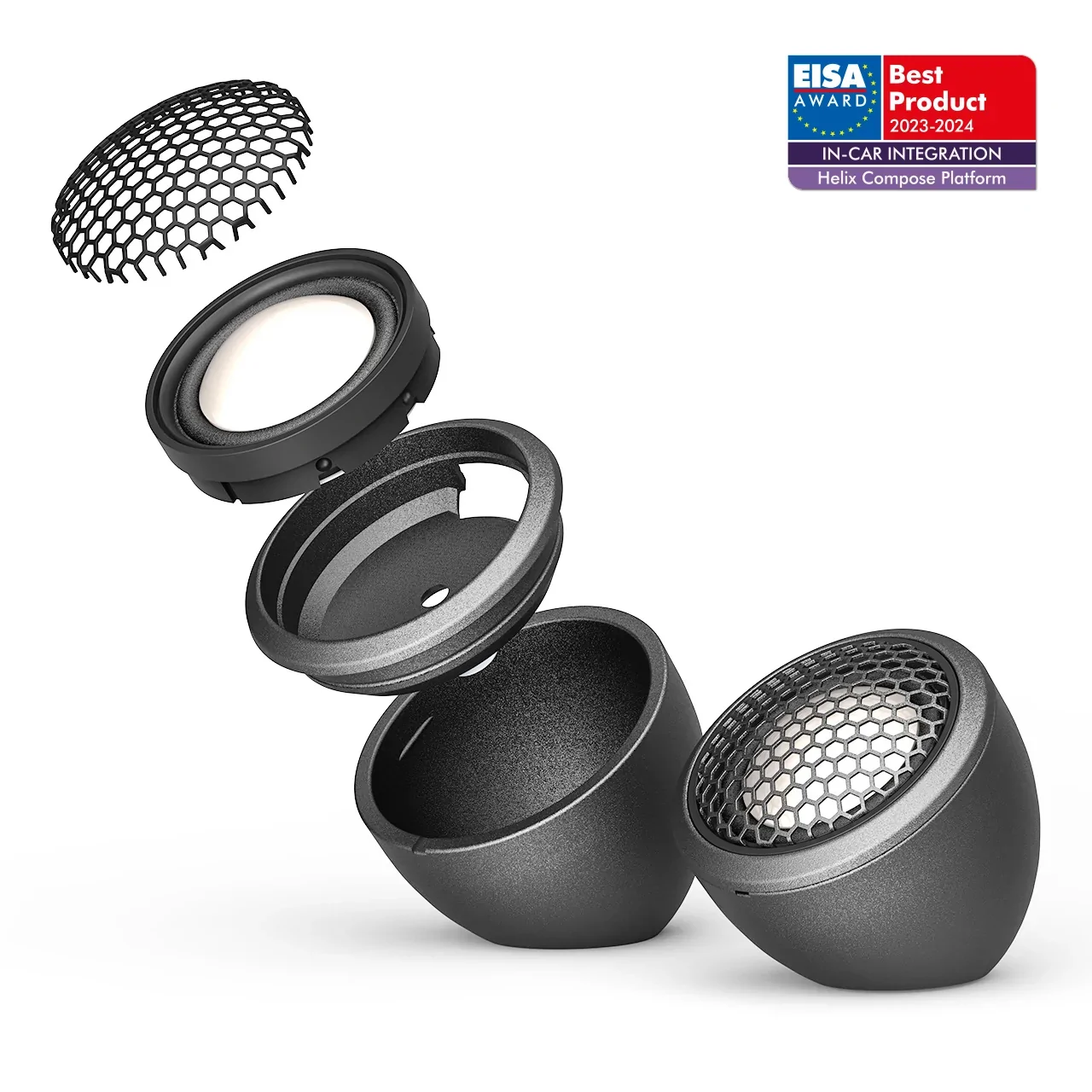
This data helped me eliminate the Seas and Musway for distortion and dispersion issues, and reconsider the Helix Ci5 which is a remarkable performer. To top it off, it's tiny and comes with various custom mounts in the box. It's likely my final choice but I'm still debating the Scan-Speak a little because of my love for the brand.

That said, the Helix has better off axis response and surprisingly better distortion than the much more expensive Scan-Speak. And it's WAY smaller. So it will be hard to beat.

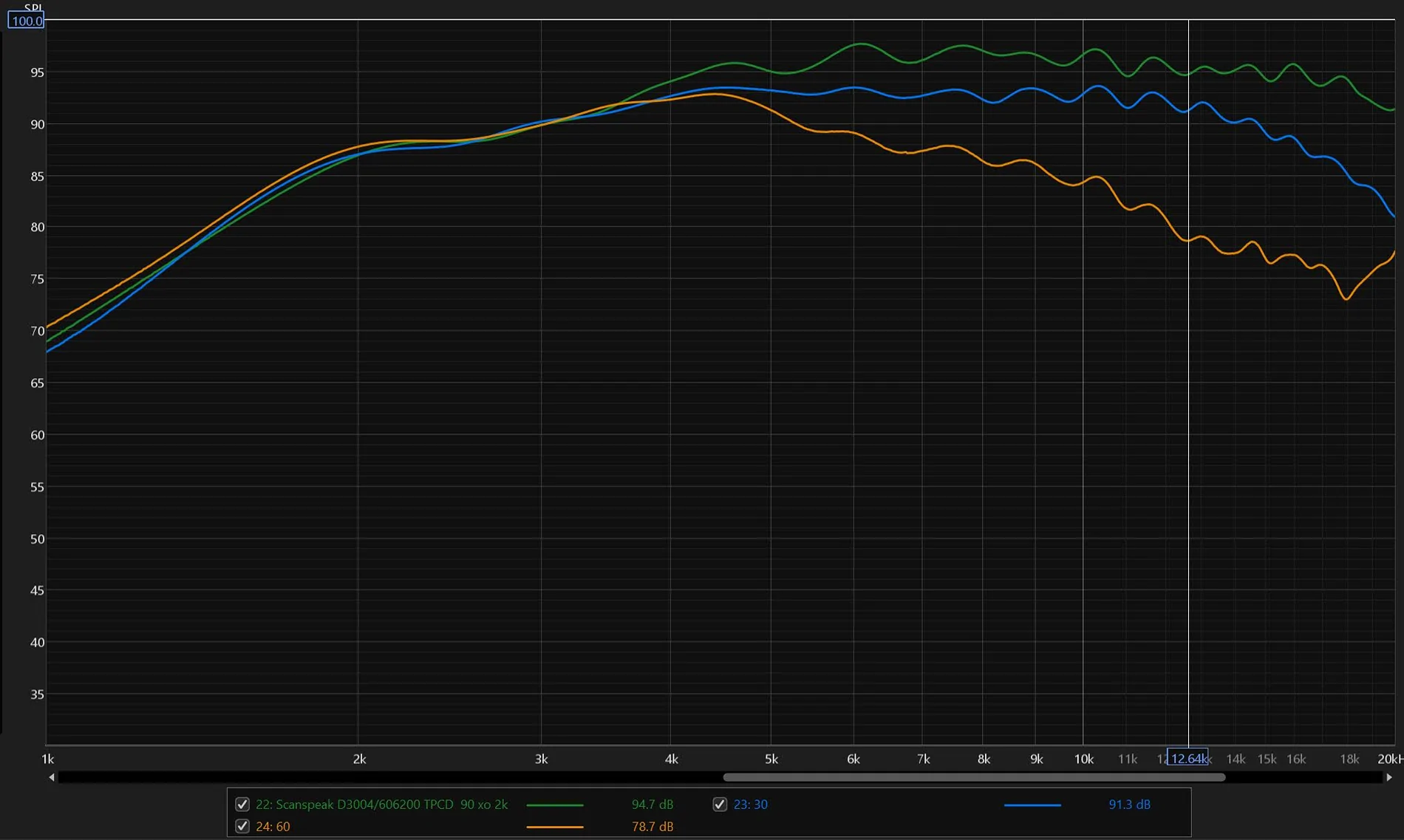
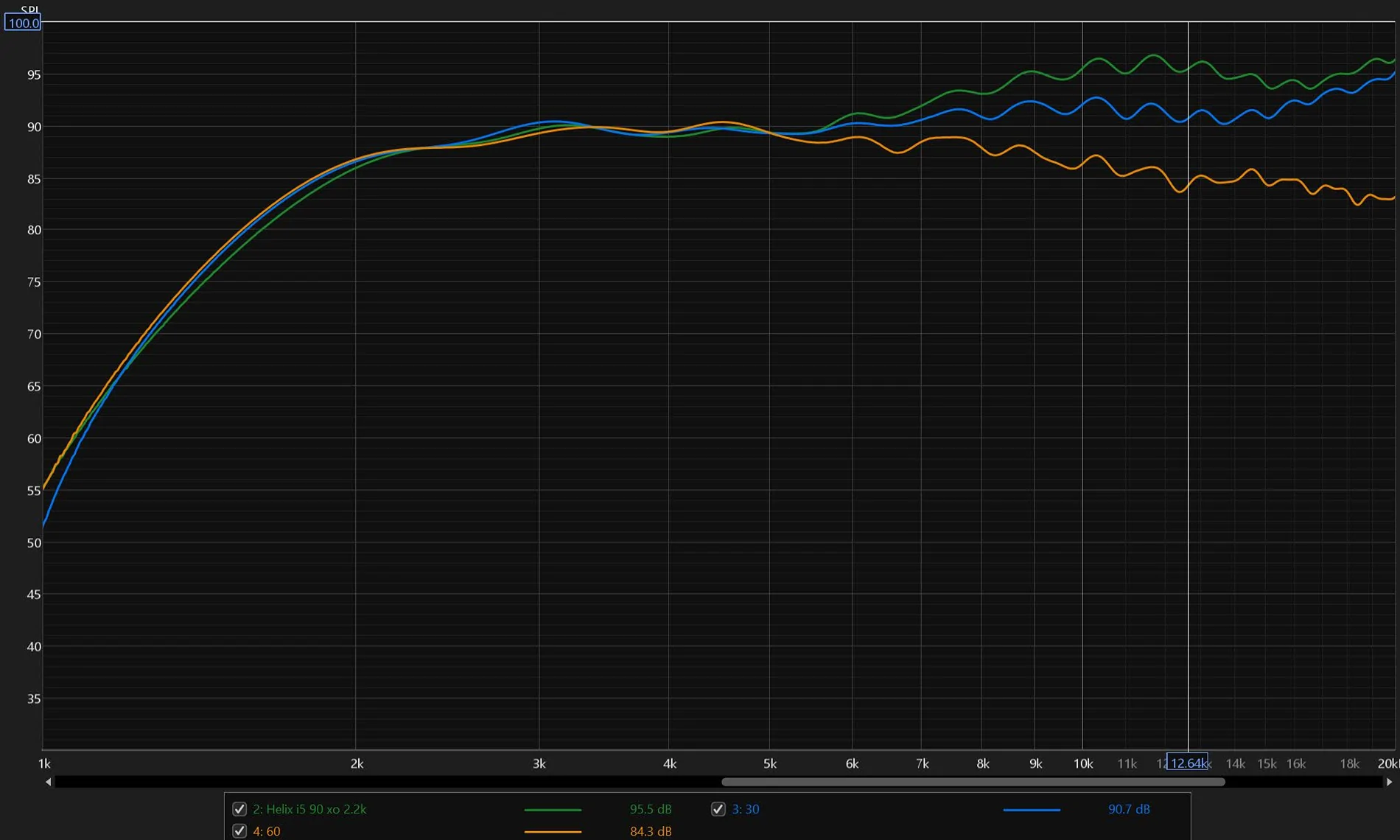
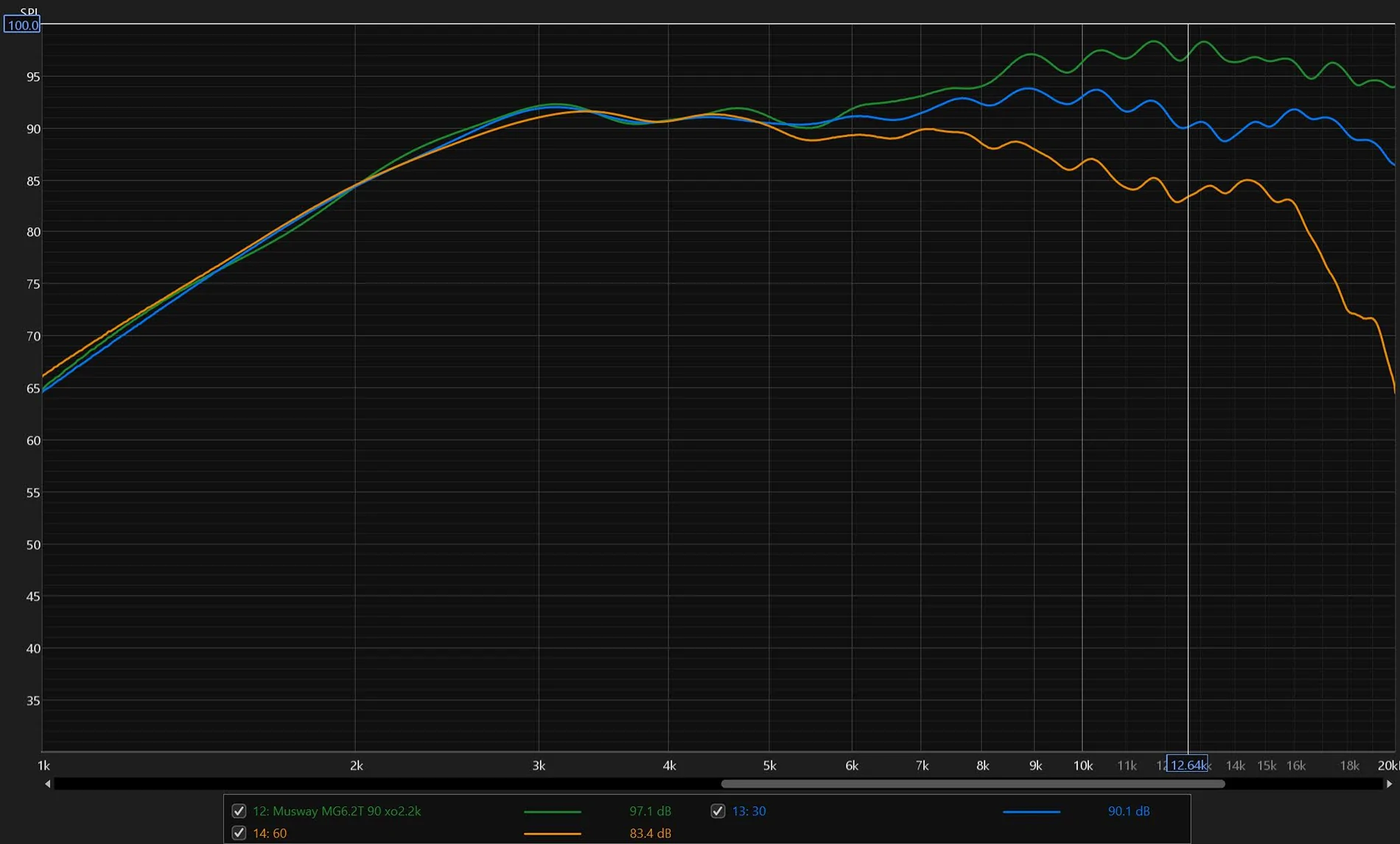
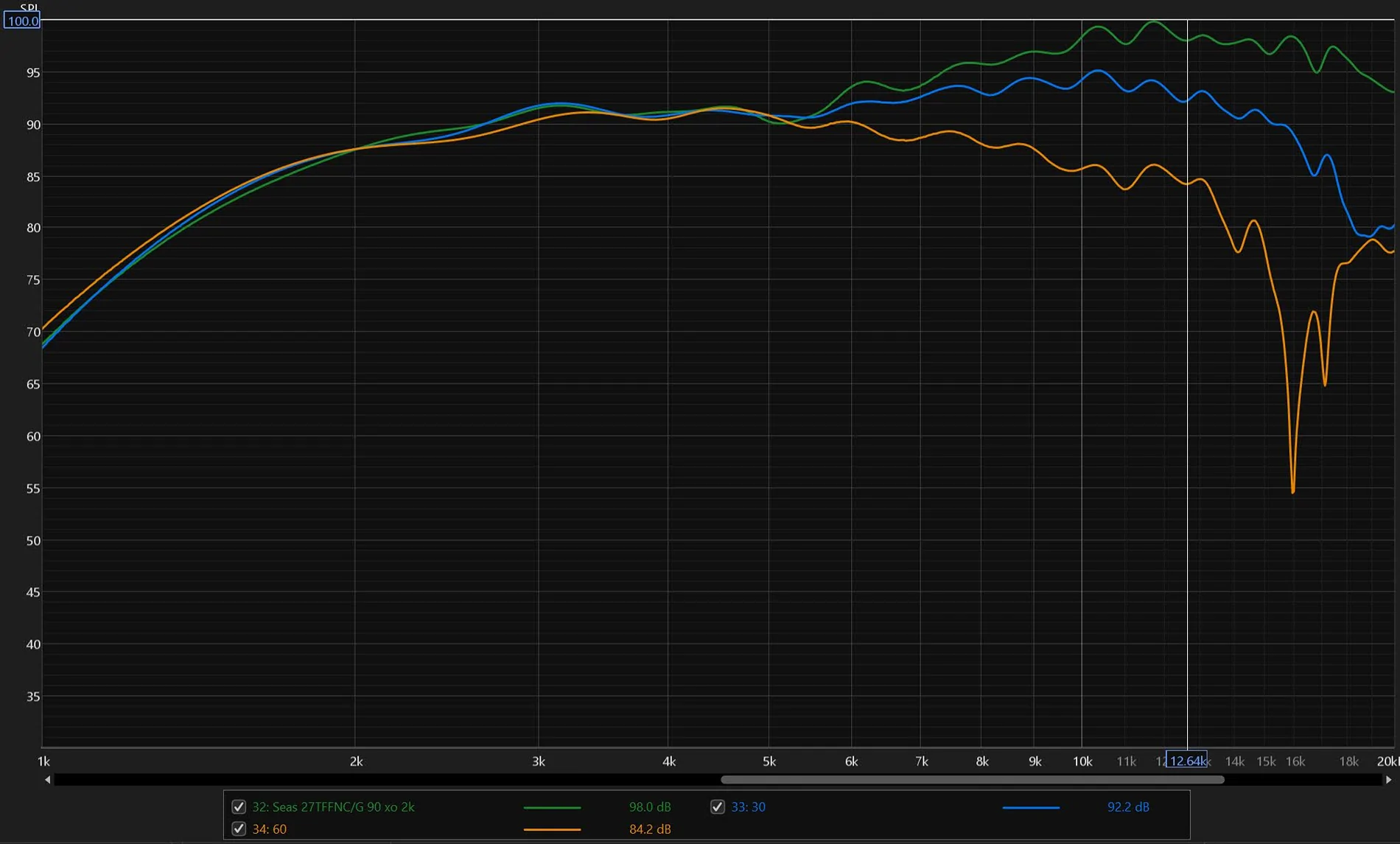
Here are some screenshots from REW showing the 0, 30 and 60 degree farfield responses:

Scan-Speak:
Acura Integra Sound system build progress thread (warning: will be slooooow) 1767460076014-a2


Helix:
Acura Integra Sound system build progress thread (warning: will be slooooow) 1767460085749-68


Musway:
Acura Integra Sound system build progress thread (warning: will be slooooow) 1767460094049-yi


Seas:
Acura Integra Sound system build progress thread (warning: will be slooooow) 1767460102612-sn


As you can see, the Musway has a rapid fall off on the extreme off axis response in the highest registers, and the Seas has a weird diffraction effect of some sort. Those aren't that important because it's at the limit of human hearing. I'm more interested in how consistent the 0, 30 and 60 degree curves are from about 5 to 10kHz. Keeping this spread as tight and "similarly shaped" as possible leads to a much more stable soundstage with varying head position. The Helix does need a little EQ up top to tame some brightness, but that's absolutely not an issue and it's always better to have to take some signal out than put some in.

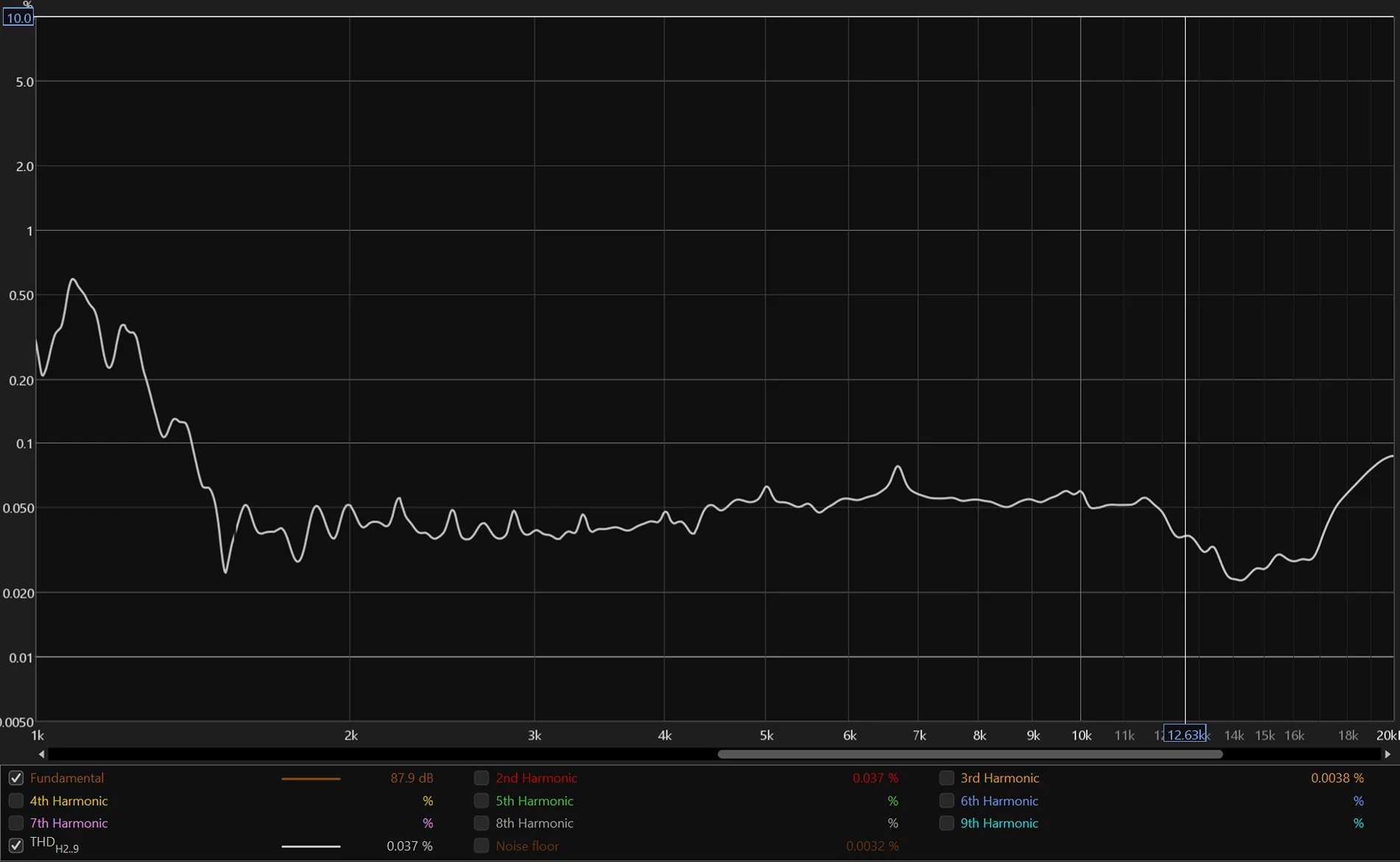
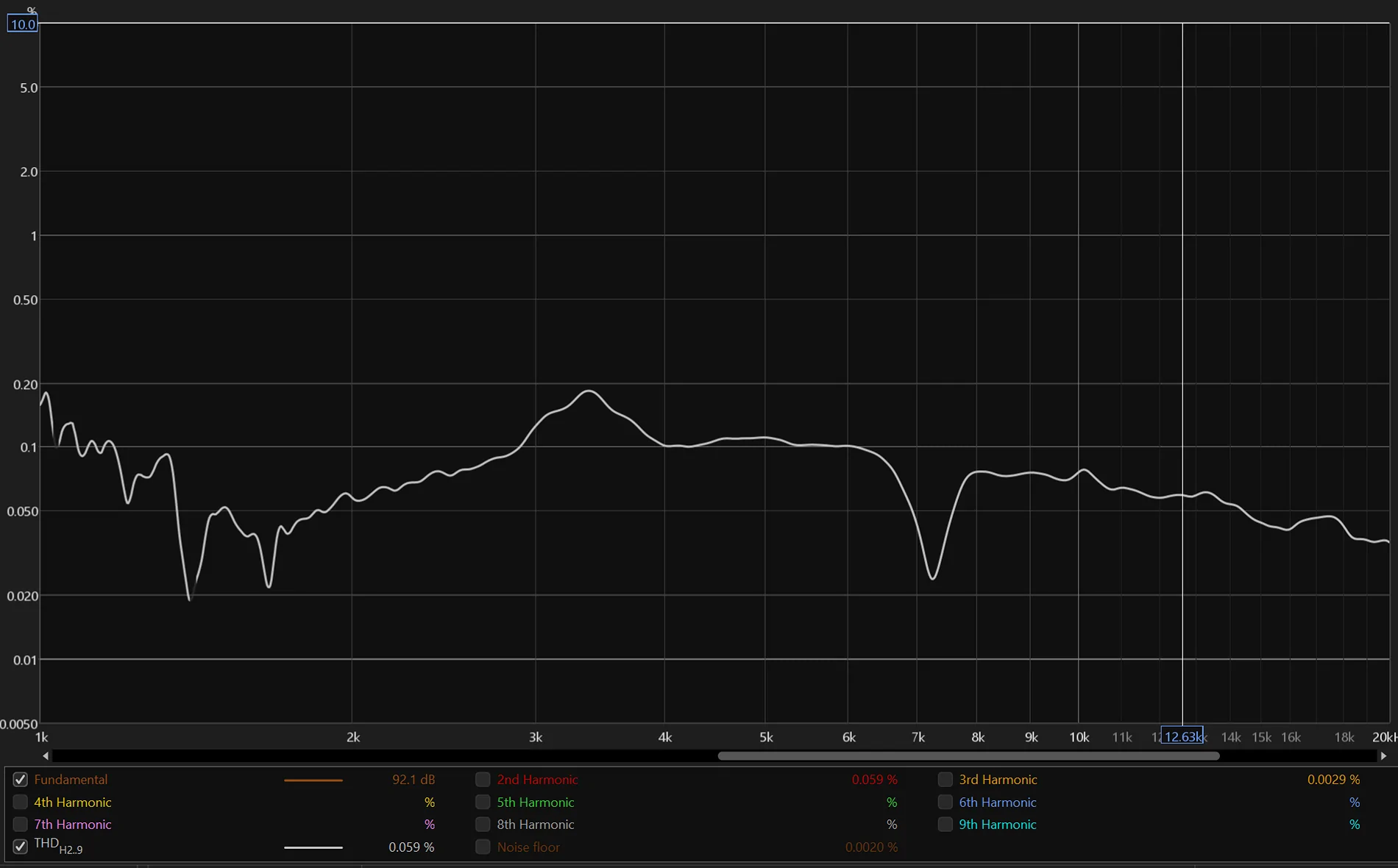
Some might warn that you should not use a metal dome if you don't like harshness, but it's critical to distinguish between brightness and harshness as they are not the same thing. Brightness is caused by extra sound energy, which can be tamed, while harshness is caused by distortion which cannot be EQ'ed out. That's why you need to look at response (SPL) and distortion to know whether a speaker is a good choice. As you'll see in the next post, the Helix has the lowest distortion between the measured speakers. it won't sound harsh at all in fact it will sound the cleanest.

What the Scan-Speak has going for it is authoritative lower-frequency extension. It's just a beast, and can play loud and low all day. It's the reason I'm considering it, but I think it's probably not worth the trade-offs (worse dispersion, top end response, and distortion).
 
Last edited:

Sponsored

OP
OP
ashmostro

ashmostro

Senior Member
Joined
Aug 19, 2025
Threads
19
Messages
508
Reaction score
403
Location
Northern VA
Car(s)
2025 ITS
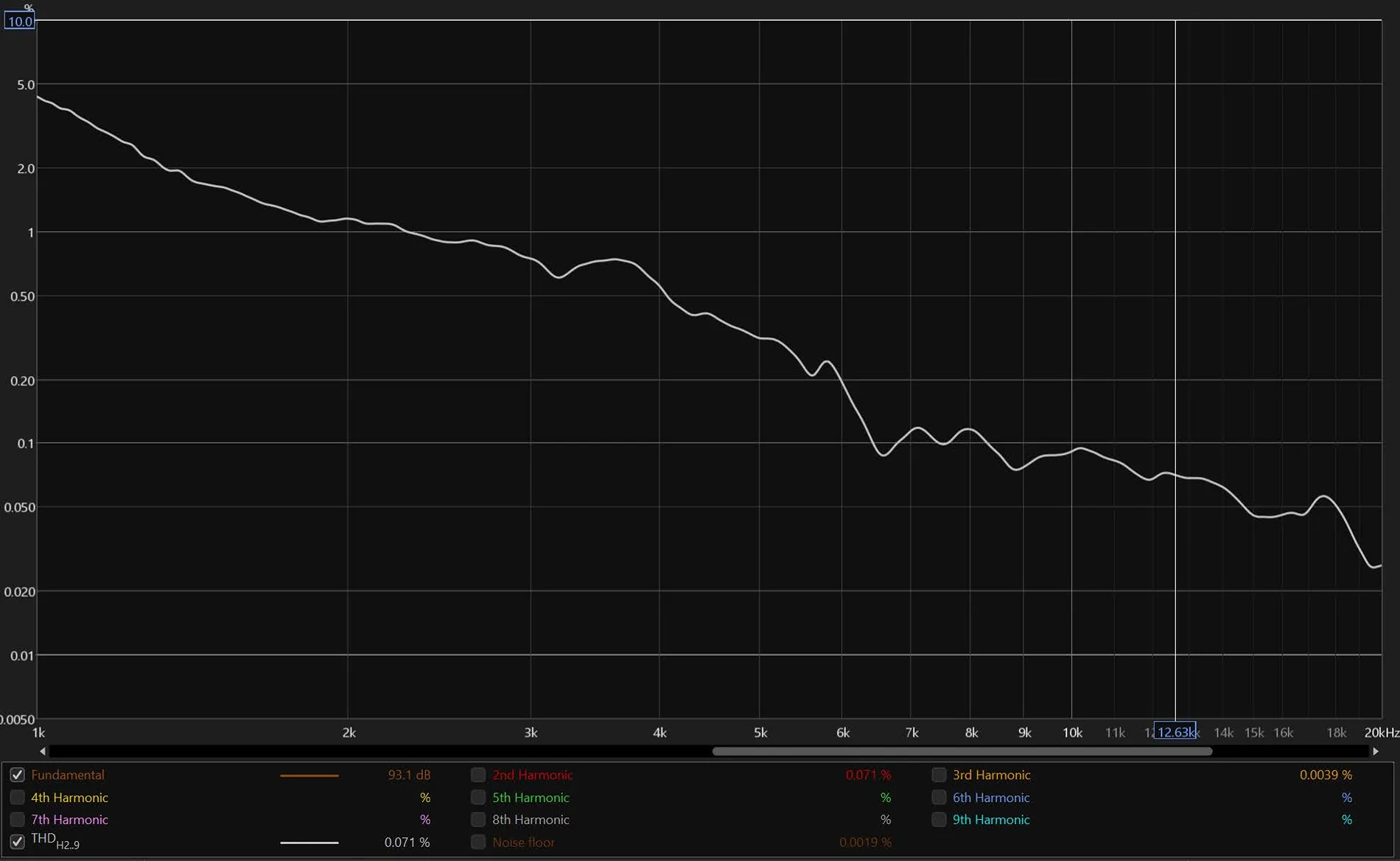
Nearfield THD for the Helix:
Acura Integra Sound system build progress thread (warning: will be slooooow) 1767460215554-t


And the Scan-Speak:
Acura Integra Sound system build progress thread (warning: will be slooooow) 1767460247061-lj


The Seas is bad:
Acura Integra Sound system build progress thread (warning: will be slooooow) 1767487491099-rm


And finally the Musway is quite good:
Acura Integra Sound system build progress thread (warning: will be slooooow) 1767487540612-j
 
Last edited:
OP
OP
ashmostro

ashmostro

Senior Member
Joined
Aug 19, 2025
Threads
19
Messages
508
Reaction score
403
Location
Northern VA
Car(s)
2025 ITS
HUGE progress update on the system DESIGN phase. The components have all been selected and purchased! Quite a bit of changes were made for a variety of reasons, and I will be updating the original design post at the front of this thread to reflect this.

This post serves to detail all the component selections and the reasons for each (and why I didn't go with other components I had been considering). For ease of reference I'll section this update out by component.

General Design
The system will be an active three-way front stage (six speakers), plus a single subwoofer in the trunk. All other factory speakers will be disabled, which means no rear fill speakers at all. If I decide I want to re-introduce rear fill, I can easily reconnect (or fade in) the factory rear speakers off the factory power. This is unlikely as I prefer a stage-front rather than a surround presence. All speakers will have independent time delay, EQ, and crossovers applied within a single DSP-amplifier.

During my subwoofer and front bass speaker analysis process I used WinISD software to model the response of every driver I considered, using their Thiele-Small parameters, which are generally provided by all reputable performance-oriented speaker brands (it's a rule of mine to never buy a speaker whose T-S parameters are not provided as you simply can't know what you're getting, and it's often a sign of inferior performance anyway).

This is relevant in that I was able to model max SPL levels and power headroom for every speaker, and thereby determine exactly how much power to purchase in an amplifier without overspending. I used an SPL meter app on my phone to monitor my most extreme listening habits (i.e. the absolute loudest I could tolerate) and I found that I was rarely seeing peaks of 95dB. This is well within the capabilities of almost every speaker and subwoofer, so I knew I could dial down the power requirement. In fact, I set a benchmark of 100dB of headroom as a buffer, so I know I will never be wont for SPL impact.

My performance priorities are lowest possible harmonic distortion, lowest possible frequency response in-cabin, well-matched driver sensitivities to extract the most out of the amplifier, and the most consistent off-axis dispersion as far up the frequency spectrum as possible (essentially only the tweeter will play past its beaming frequency, where sound starts to "narrow" into a focused beam).


These are the results of these constraints and goals:

DSP-Amplifier Selection
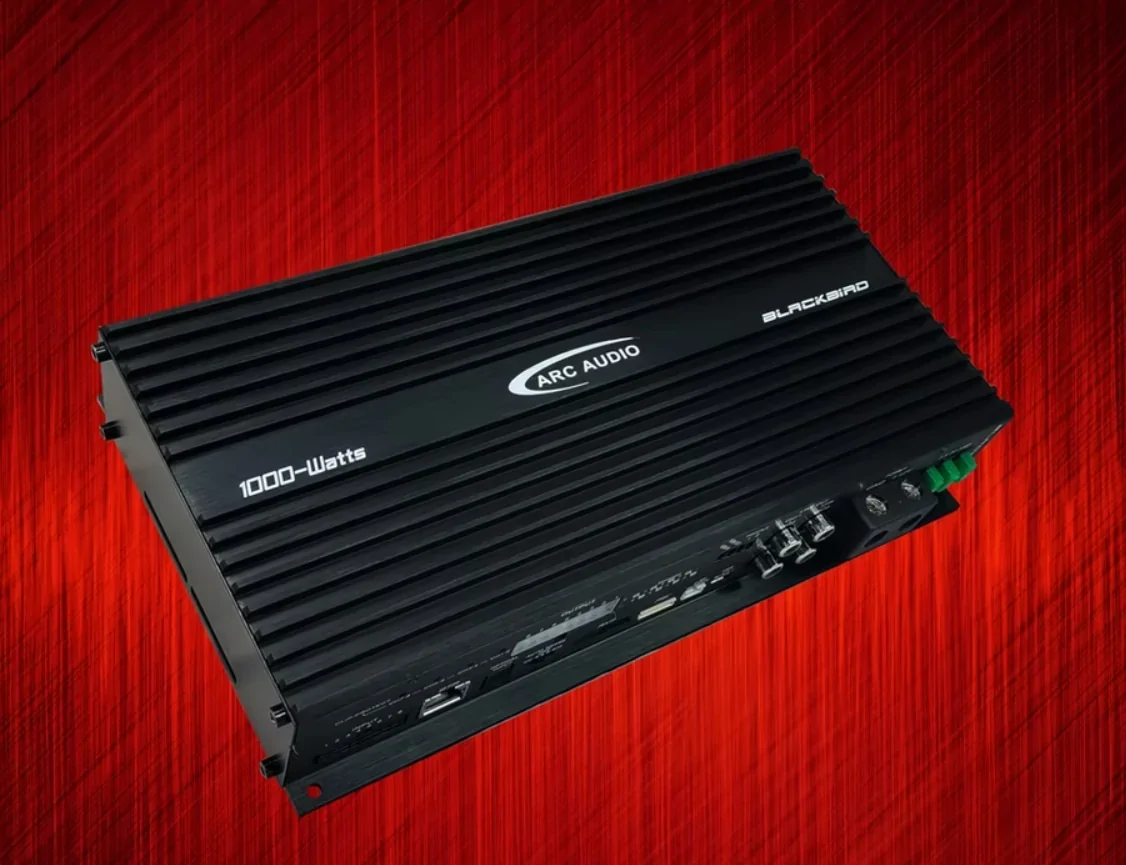
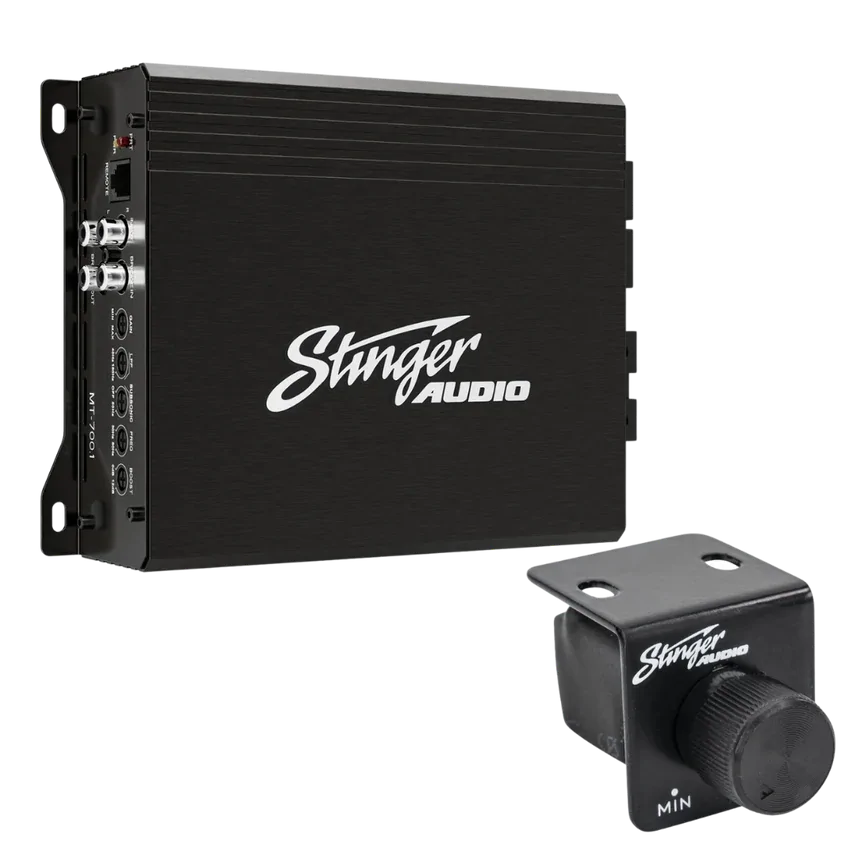
I have chosen the Arc Audio Blackbird. This is an 8-channel amplifier with 12 channels of DSP. I will bridge channels 7+8 to drive the subwoofer. I selected this amplifier due to brand reputation for stellar performance and client service. It's a class D amp so it's small for its output (75W x6 + 250W x1). This amplifier will easily power all my speakers including the subwoofer beyond my target buffer of 100dB.

Finalist amplifiers I considered:​
Arc Audio X2 800.8 (not enough power)​
Audison AF C8.14 bit (not enough power and software/hardware inferior to Arc)​
Audison AF M8.14 bit (software/hardware inferior to Arc)​
JL Audio VX800/8i (not enough power and hardware inferior to Arc)​

Front Midbass Selection
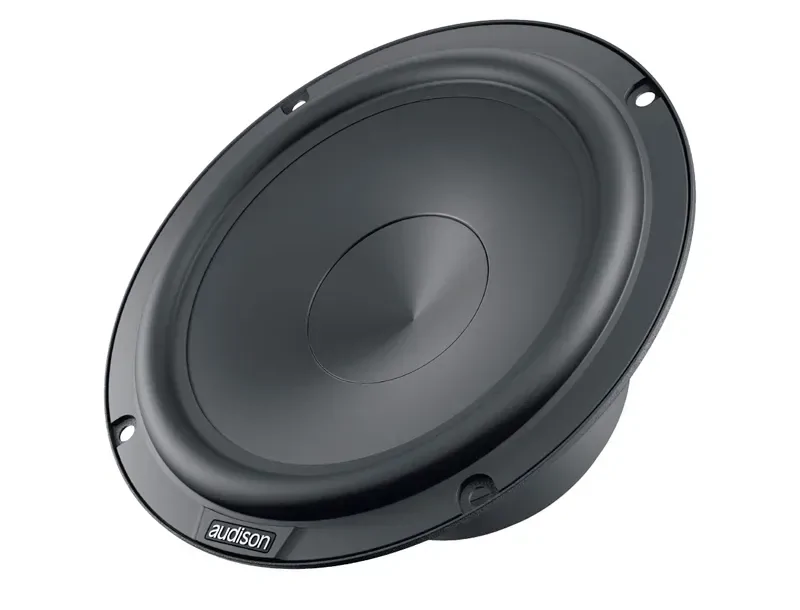
Originally I was set on (and purchased) the brutal "SQL" class Stereo Integrity TM65 mkIV. Unfortunately, I did not realize how small the door cutout is in our cars - too small to fit the girthy SI midbass, so I had to sell it. The replacement, which performs similar to the SI just with a lower max SPL capability (but still hits my 100dB target) is a set of Audison AP 6.5P midbasses. This speaker measures excellently and has shorting rings, and has a large Xmax compared to other "big brand" speakers. This means they will be very low distortion electro-mechanically. The treated paper cone means there will be little to no cone breakup within the passband. And since I am crossing these over at around 250-300Hz, any breakup is far beyond the cutoff and won't be audible.

Finalist midbasses I considered (other than the TM65):​
Hertz C165L (close to Audison performance but slightly less Xmax)​
Dayton Audio SIG180-4 (low Qts not a good match for the door location; low Xmax too)​

Front Midrange Selection
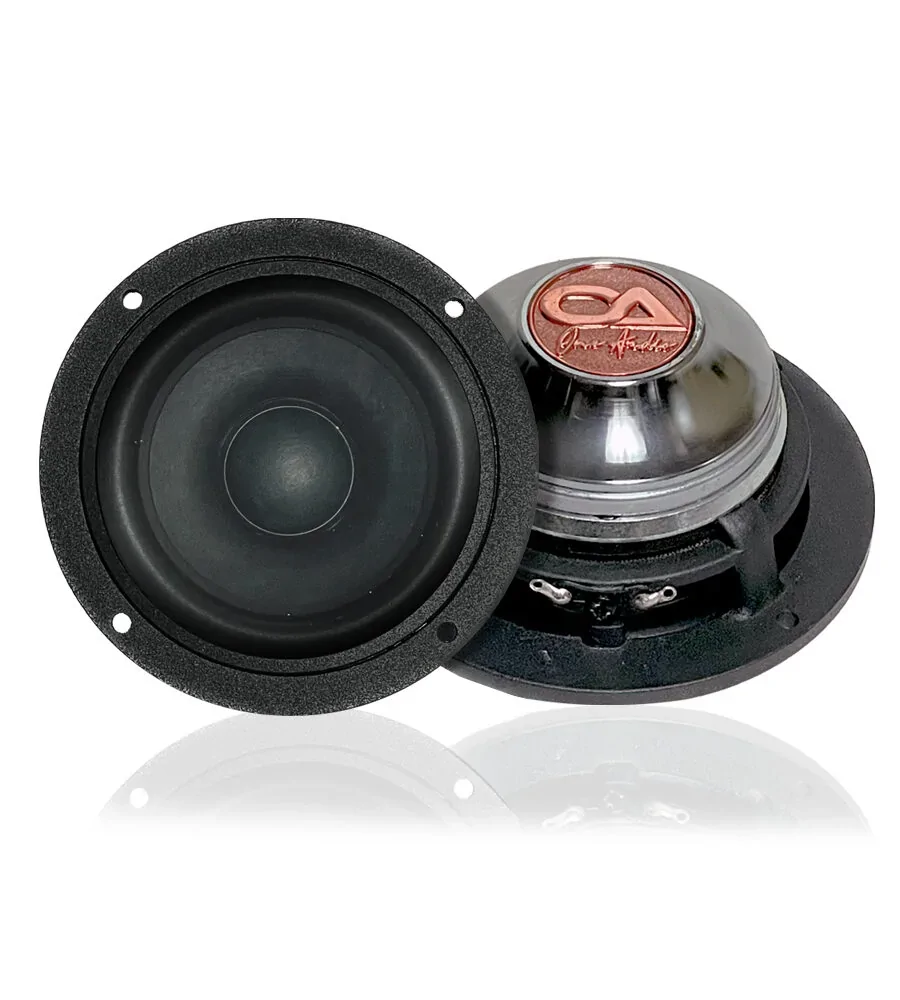
This was a tough choice. I went through literally hundreds of drivers to find the right one for my needs. Ultimately, the top priorities swayed my decision: as small as possible, as low a frequency response as possible, highest Xmax possible, low distortion, Qts ideal for the smallest enclosure possible since I made the decision to install these in pods on the dash or A pillars. The final choice is the OneAudio WB3.e. It is by all accounts a "wonder-driver", achieving an uncommon balance of being small, loud, clean, and low. This was also the first speaker selection where beaming would dictate the crossover point, so I eliminated 4" drivers along the way to give the tweeter a bit of a break.

Finalist midranges:​
Scan-Speak 10F/4424G00 (larger enclosure needed, and lower beaming frequency)​
Steg MS30 (expensive, requires a larger enclosure, but this was the runner-up)​

Front Tweeter Selection
Again, this was a very large list to consider. I evaluated hundreds of tweeters and ultimately chose the one with the combination of: the best dispersion pattern after beaming, a high beaming point, a low crossover point, and low distortion. Many of the tweeters I evaluated met a lot of these criteria, but only one met all of them. I went with the Helix Ci5 T25FM-CA which is shockingly good for its diminutive stature. This was another reason it tipped the scales: it will be much easier to install covertly.

Finalist tweeters:​
Audio Ace Club 1 (almost bought this one, but the smaller Helix tipped the scales)​
Musway MG6.2T (couldn't compare to the Helix in top end dispersion)​
Seas Prestige 27TFFNC/G (higher distortion; poor top-end dispersion)​

Subwoofer Selection
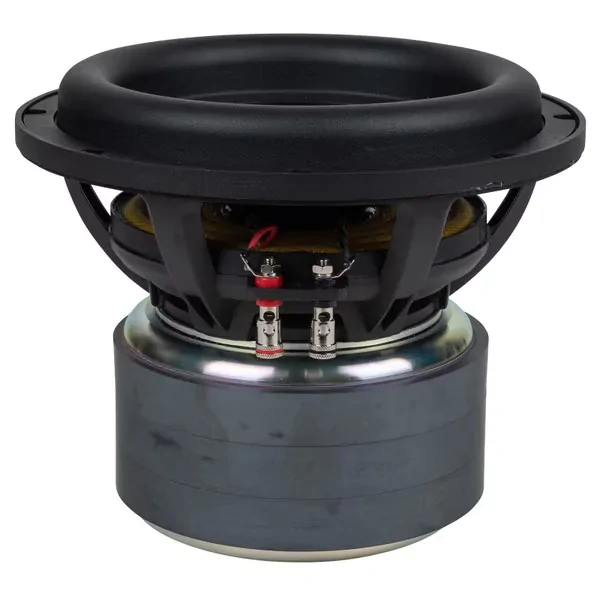
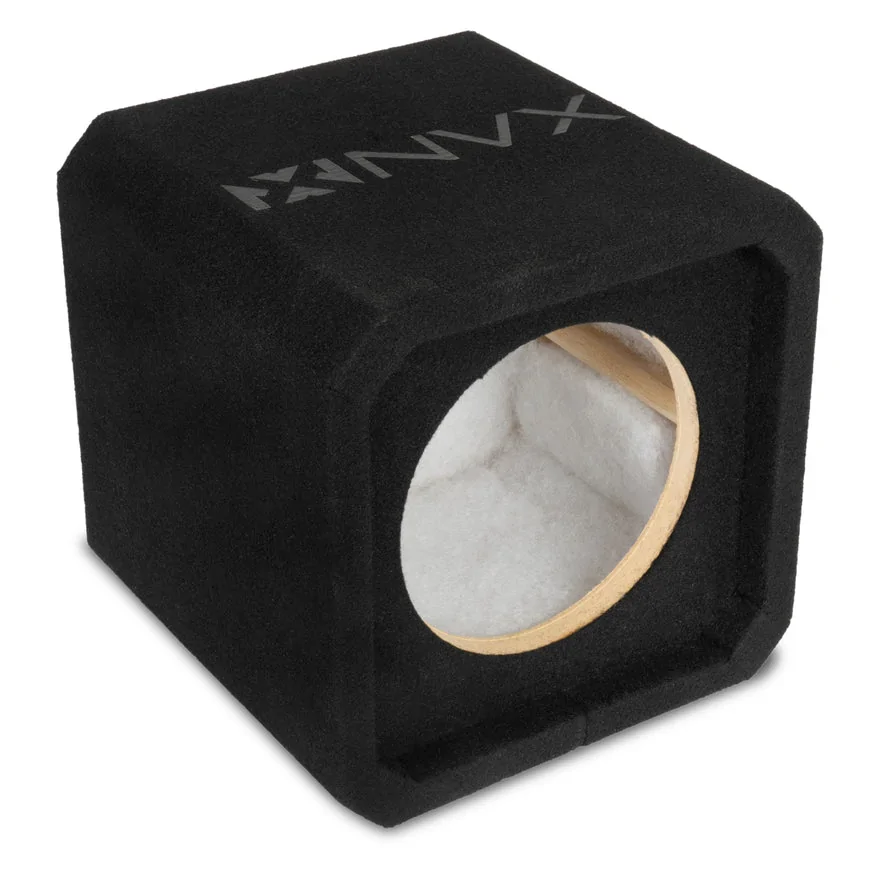
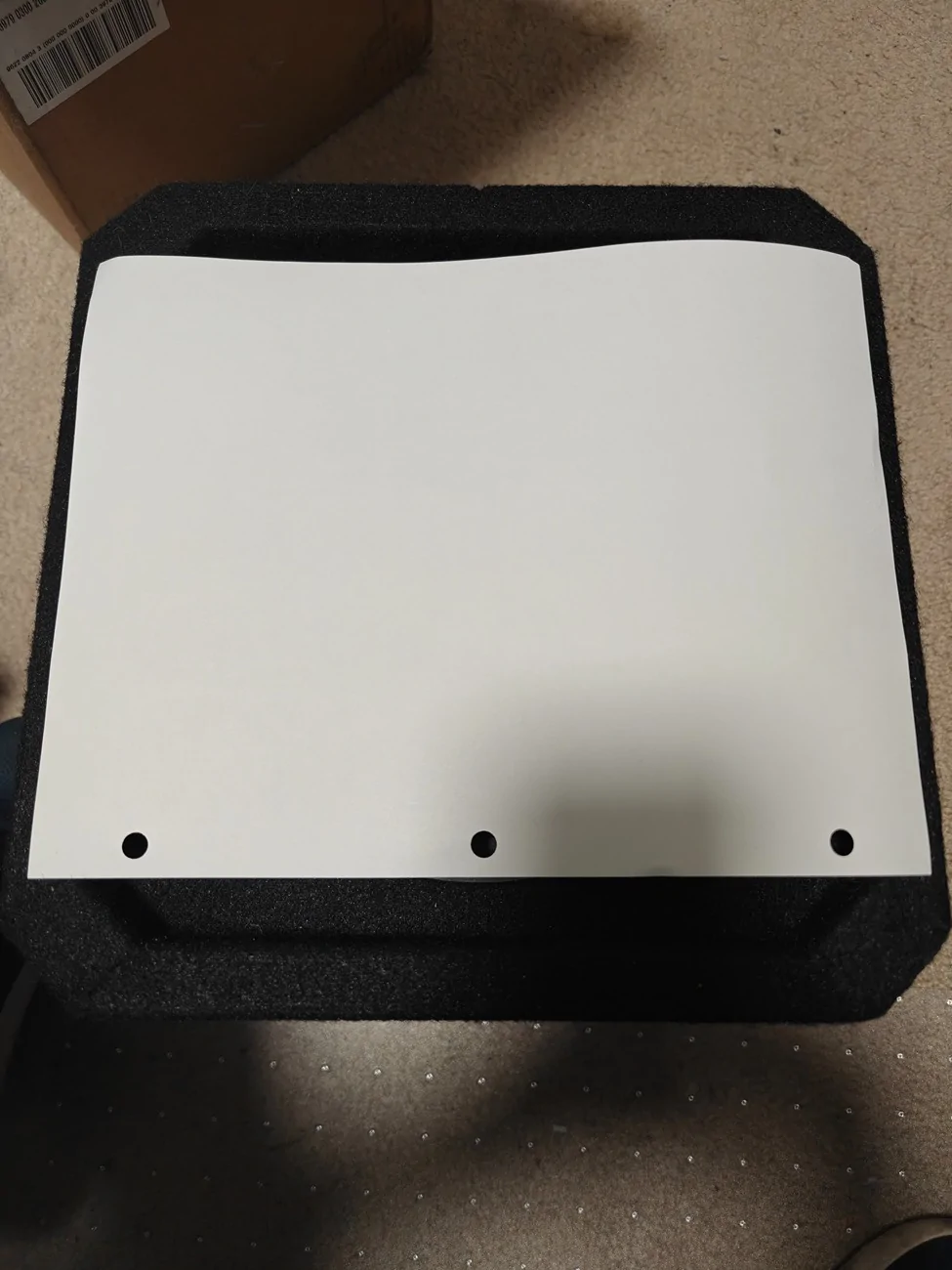
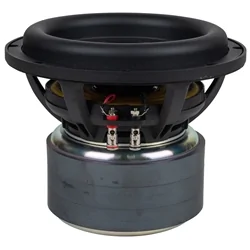
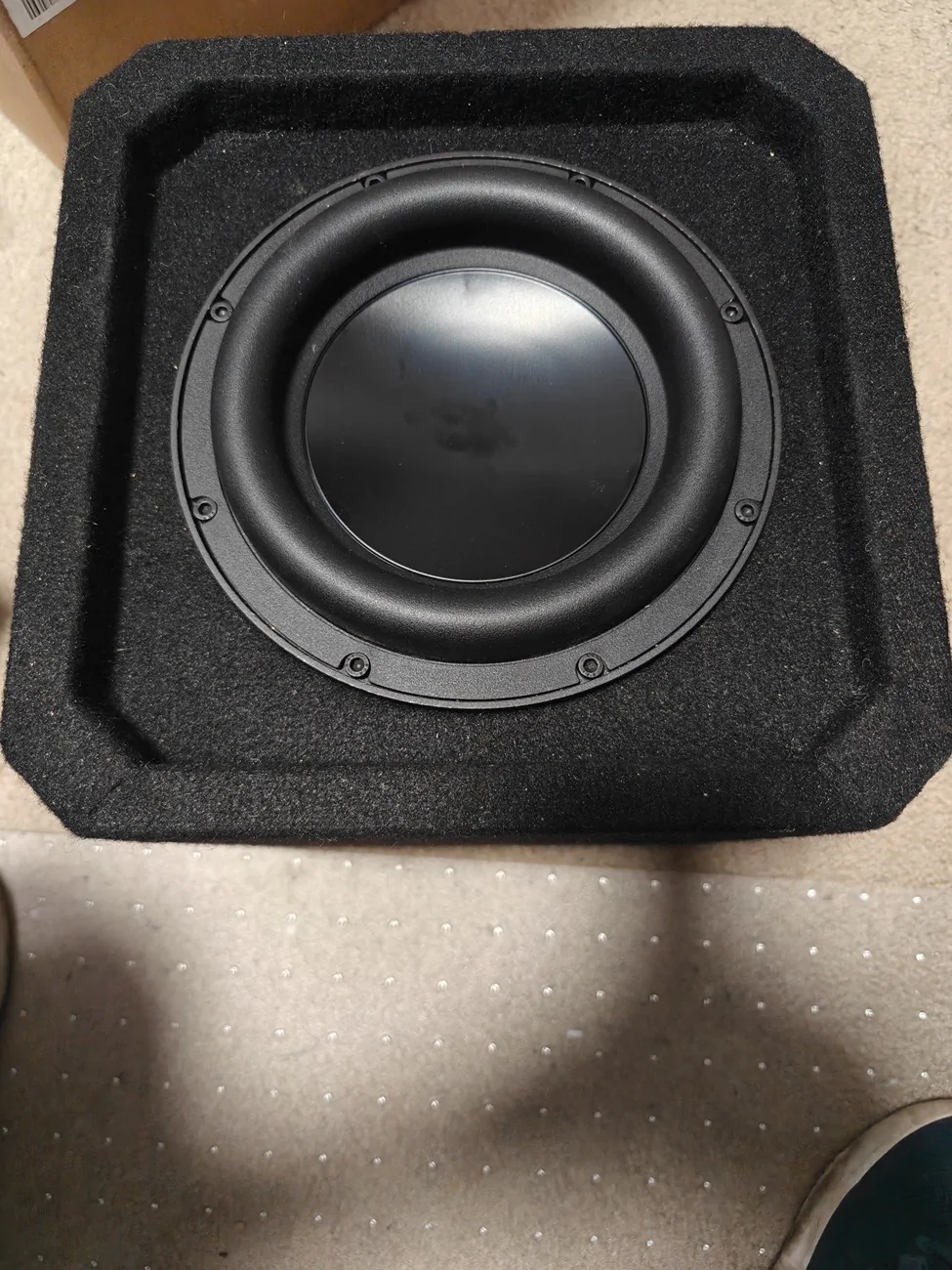
This was tough. I tried really really hard to find a subwoofer that would work for the factory enclosure, and there are a lot that will. In fact, I would recommend many of them to most people as they will perform very well. But I am aiming for perfect frequency response and extreme sub-bass depth and SPL capability. In the end I conceded that I'd need to use a separate enclosure, and since I didn't want to spend a lot of money on custom fabrication, I searched for an optimal pre-fab enclosure at a good price and high build quality. My constraints now became: as small an enclosure as possible, effortless extension to 20Hz, huge Xmax (for linearity and SPL), low distortion, capability to drive +10dB transients above the front stage. This combination was no easy feat. Almost every 8" subwoofer failed to meet the criteria and I nearly went with a 10", but I did one final search on Parts Express and found a miracle sub: the Dayton Audio SS8-22 which will happily perform in a tiny 0.45 cu-ft enclosure by NVX.

Finalist Subwoofers:​
Dayton Audio SS10-22 (this was choice #2, but when I found I could meet my SPL target with an 8" sub I went with the smaller version of this driver)​
Dayton RSS265HF-4 (poor cone control, larger enclosure, low max SPL)​
Dayton RSS265HO-44 (larger enclosure)​
Dayton Audio UMII10-22 (larger enclosure)​
Dayton Audio UMII8-22 (larger enclosure)​
Dayton RSS265HO-4 (larger enclosure)​
Dayton RSS210HO-4 (low max SPL)​
Dayton RSS210HF-4 (law max SPL)​
GRS 8SW-4HE (poor distortion, low SPL, large enclosure)​
GRS 10SW-4HE (poor distortion, very large enclosure)​


Now that I've purchased all the parts, I will begin the slow process of wiring, determining amplifier mounting locations, measuring the factory amplifier outputs to optimize the sound quality. I am also toying with the idea of going full digital and grabbing the S/PDIF signal going to the factory amplifier and then building a logic circuit to convert the car's RS485 volume control signal to something the Arc Audio can understand. If I do this, I'll probably first set the system up via the analog speaker level outputs from the factory amp and then tinker with designing the volume conversion circuit. Why do all this? Waaaaay better sound quality and totally bypassing the factory DSP which does a lot of undesirable "3D" crap to the signal to create its surround effects and to compensate for the shitty factory speaker quality. It'll be fun. Final system cost (minus materials): $2,200. I was able to buy the midbasses and the DSP amplifier as discount open box units from an authorized dealer.


Whew! Sorry for the long post! Pics of all the components below.

Acura Integra Sound system build progress thread (warning: will be slooooow) 1769404340038-vm

Acura Integra Sound system build progress thread (warning: will be slooooow) 1769404350173-u5

Acura Integra Sound system build progress thread (warning: will be slooooow) 1769404358914-k


Acura Integra Sound system build progress thread (warning: will be slooooow) 1769404367785-qj

Acura Integra Sound system build progress thread (warning: will be slooooow) 1769404374458-7q

Acura Integra Sound system build progress thread (warning: will be slooooow) 1769404380349-v
 
Last edited:

Dvs1270

Member
First Name
Jeffery
Joined
Sep 23, 2025
Threads
3
Messages
32
Reaction score
38
Location
Midland, Ga
Car(s)
2025 Integra Type 2, 2025 BMW X30 X-drive
I hadn't considered that the ANC only feeds through the subwoofer but that does make perfect sense since road noise is mostly bass. That explains why the ANC microphone is on the headliner above the rear seats!

Good job on your setup! Have you thought about adding in the right door signal as well so you can sum stereo bass signals? They do exist on recordings, so it could be worth doing.
I did toss that around. I also considered pulling the door speakers & adding a small 2 channel/decent full range speakers. There several frequencies Honda likes to "mute". I would use the LC2i to bring them back.
To be honest, if I'm not doing commuter style driving I have the volume on 6 or 7. Awful deadening.
 
OP
OP
ashmostro

ashmostro

Senior Member
Joined
Aug 19, 2025
Threads
19
Messages
508
Reaction score
403
Location
Northern VA
Car(s)
2025 ITS
Happy to help you think through any plans you're considering. Can share what I've learned about this car so far. I haven't gotten around to doing electrical pink noise testing on each channel to discover the factory curve yet, though.
 

Sponsored

OP
OP
ashmostro

ashmostro

Senior Member
Joined
Aug 19, 2025
Threads
19
Messages
508
Reaction score
403
Location
Northern VA
Car(s)
2025 ITS
No, it won't fit there. It'll just be in the trunk, hence my desire for the smallest possible loss of utility.


Top