Sponsored


Spoon Springs for DE5

Gildiae

New Member
First Name
James
Joined
Dec 29, 2025
Threads
1
Messages
4
Reaction score
3
Location
Austin, TX
Car(s)
2025 Integra Type S
Hey all, I just picked up an Integra Type S and I’m loving every bit of it (I came from many VW’s in the past). Being a past VW GTI owner I’ve modified every bit of them from air suspension, coilovers, custom interior, performance, etc.

Now that I’m in a ITS I’m looking at lowering springs so I can utilize the factory dampening settings. I’ve pretty much narrowed it down to Spoon and wanted to know people’s experience with the spring and its performance (on road and on track). Spoon satisfies my preference with the even drop around the whole car, which is why I’m leaning towards Spoon rather than H&R. Thank you and I’m looking forward to getting involved with this community!
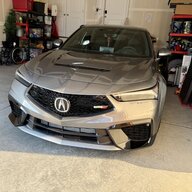
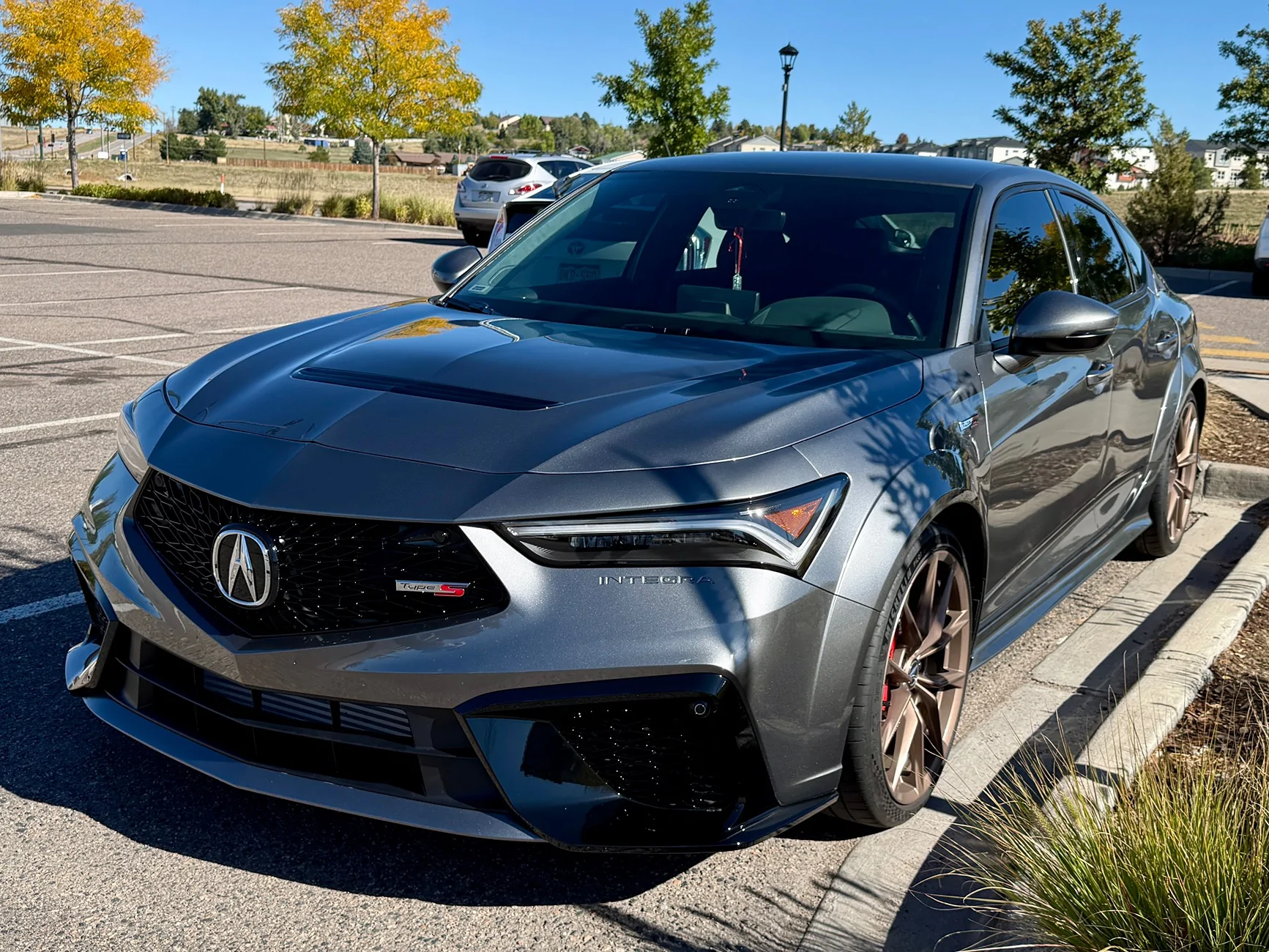
Acura Integra Spoon Springs for DE5 IMG_0791
Sponsored


Victorofhavoc

Senior Member
First Name
Gordan
Joined
Jul 9, 2024
Threads
12
Messages
1,492
Reaction score
1,028
Location
Kansas City
Car(s)
Integra type s
Springs will negatively impact handling without alignment correction if you care about that sort of thing. @optronix autocrosses and added healthy camber up front with ball joints.

Boy, we're creating quite the "former gti owner" club around here! I had an mk7 autobahn dsg I was tracking frequently. We lose some interior quality, tech, and ecu registry control but we gain a much more aggressive platform out of the gate and dramatically better brakes.

DSC has their product out now for this car as well so might be worth looking into for you!

Welcome! The its is a blast! Closest thing we have to a clubsport s in the states.
 
OP
OP
Gildiae

Gildiae

New Member
First Name
James
Joined
Dec 29, 2025
Threads
1
Messages
4
Reaction score
3
Location
Austin, TX
Car(s)
2025 Integra Type S
I loved my GTI, but I was having some major issues at only 54k miles so I had to let it go and leave the VW brand forever lol.

I’ve read that camber adjustment is necessary and may require some lower control arms and ball joints, like you mentioned. I daily the car and only drive to work 3 days out of the week, so it won’t see much track time except for maybe a few times a year.
 

optronix

Senior Member
Joined
Apr 15, 2023
Threads
27
Messages
1,791
Reaction score
2,561
Location
MD
Car(s)
2024 Integra Type S, 2023 Macan GTS
I don't think there's too much variance in what springs you choose. Spoon could be viewed as being excessively expensive for no good reason, but they are very popular. There was an issue early on with a pretty substantial reverse rake for the Spoon springs- there were a few discussions on this topic over on the FL5 forums- but presumably that's been sorted out with a newer revision since at least a year ago, but I'd keep an eye out for that especially if you buy a used set.

As for camber, yes I'd say it's mandatory. But I'm also quick to point out that I didn't notice the negative impact until the first run at autocross after the springs install. It was horrible, and adding camber made a literal "night and day" difference- but I've also chewed through several tires in the year since I've done that (also 100+ autocross runs had something to do with that).

My personal recommendation would be to shoot for ~2-2.5 degrees negative camber in the front (through ball joints/top hats) for a primarily street driven car, that should be pretty close to matching what to expect for the rear after the drop and give you a net benefit in turn-in and responsiveness. Otherwise if you don't foresee any significant track-oriented driving then it's probably fine to just go with the camber correcting control arms for the rear to bring it back inline with OEM, which is between -1 and -1.5 (there is a fair amount of variance in the OEM alignment from car to car... and even from side to side on the same car....).

I'll add that I've noticed MOST people who lower the car do not do anything with the camber. But you don't have to be like most people, who are doing it wrong IMHO.

Also FWIW I've recently started deeply considering geometry correction (i.e., roll-center adjusters) after noticing some bump steer on the street. My only concern with that is the "special" geometry of these cars, I can't really get a straight answer when it comes utilizing both the roll-center adjusters and adjustable lower ball joints. I personally am not aware of anyone who's done both at the same time so didn't want to be the guinea pig.
 

Sponsored

OP
OP
Gildiae

Gildiae

New Member
First Name
James
Joined
Dec 29, 2025
Threads
1
Messages
4
Reaction score
3
Location
Austin, TX
Car(s)
2025 Integra Type S
Great write up and information!
 

nikw91

Member
First Name
Nik
Joined
Dec 22, 2025
Threads
1
Messages
8
Reaction score
0
Location
South Florida
Car(s)
2025 Honda Civic Type R
I don't think there's too much variance in what springs you choose. Spoon could be viewed as being excessively expensive for no good reason, but they are very popular. There was an issue early on with a pretty substantial reverse rake for the Spoon springs- there were a few discussions on this topic over on the FL5 forums- but presumably that's been sorted out with a newer revision since at least a year ago, but I'd keep an eye out for that especially if you buy a used set.

As for camber, yes I'd say it's mandatory. But I'm also quick to point out that I didn't notice the negative impact until the first run at autocross after the springs install. It was horrible, and adding camber made a literal "night and day" difference- but I've also chewed through several tires in the year since I've done that (also 100+ autocross runs had something to do with that).

My personal recommendation would be to shoot for ~2-2.5 degrees negative camber in the front (through ball joints/top hats) for a primarily street driven car, that should be pretty close to matching what to expect for the rear after the drop and give you a net benefit in turn-in and responsiveness. Otherwise if you don't foresee any significant track-oriented driving then it's probably fine to just go with the camber correcting control arms for the rear to bring it back inline with OEM, which is between -1 and -1.5 (there is a fair amount of variance in the OEM alignment from car to car... and even from side to side on the same car....).

I'll add that I've noticed MOST people who lower the car do not do anything with the camber. But you don't have to be like most people, who are doing it wrong IMHO.

Also FWIW I've recently started deeply considering geometry correction (i.e., roll-center adjusters) after noticing some bump steer on the street. My only concern with that is the "special" geometry of these cars, I can't really get a straight answer when it comes utilizing both the roll-center adjusters and adjustable lower ball joints. I personally am not aware of anyone who's done both at the same time so didn't want to be the guinea pig.
I track every other month lately and have recently bought Spoon springs but was not planning to do any other suspension mods.

From what you’re saying, the car will handle worse if I install the Spoon springs and don’t buy any LCAs or ball joints to adjust the camber!?
 

optronix

Senior Member
Joined
Apr 15, 2023
Threads
27
Messages
1,791
Reaction score
2,561
Location
MD
Car(s)
2024 Integra Type S, 2023 Macan GTS
I track every other month lately and have recently bought Spoon springs but was not planning to do any other suspension mods.

From what you’re saying, the car will handle worse if I install the Spoon springs and don’t buy any LCAs or ball joints to adjust the camber!?
Yes. Unequivocally.

I'll give you a quick TL;DR rundown. I'd suggest pulling up claude or chatgpt to get a detailed breakdown if you're interested.

There's also this amazing video by one of the best in the biz.

https://motoiq.com/watch-lowering-y...center-bump-steer-more-for-ultimate-handling/

The front suspension is McPherson strut, the rear is multi-link. Honda engineered it like this for a reason to allow for the rear to rotate more with most of the weight over the front wheels. However, when you lower the car, the "virtual swing arm" from the suspension design rotates and creates a camber curve. It is shallower by design with a stiff strut in the front than the multiple lateral and trailing links in the rear. This results in gaining more camber in the rear than the front when under load- and this becomes static when lowering the car.

@Victorofhavoc to keep me honest and make sure I captured that correctly.

What happens when you have more camber in the rear than the front in a front-wheel drive platform? UNDERSTEER. Lots of it.

Nearly ruined the car for me until I fixed it.

But we haven't gotten into some of the other things that are affected; watch the motoiq vid for more details.
 
OP
OP
Gildiae

Gildiae

New Member
First Name
James
Joined
Dec 29, 2025
Threads
1
Messages
4
Reaction score
3
Location
Austin, TX
Car(s)
2025 Integra Type S
I track every other month lately and have recently bought Spoon springs but was not planning to do any other suspension mods.

From what you’re saying, the car will handle worse if I install the Spoon springs and don’t buy any LCAs or ball joints to adjust the camber!?
Let me know if you go the spoon route especially taking in what Optronix mentioned.
 

Sponsored

nikw91

Member
First Name
Nik
Joined
Dec 22, 2025
Threads
1
Messages
8
Reaction score
0
Location
South Florida
Car(s)
2025 Honda Civic Type R
Let me know if you go the spoon route especially taking in what Optronix mentioned.
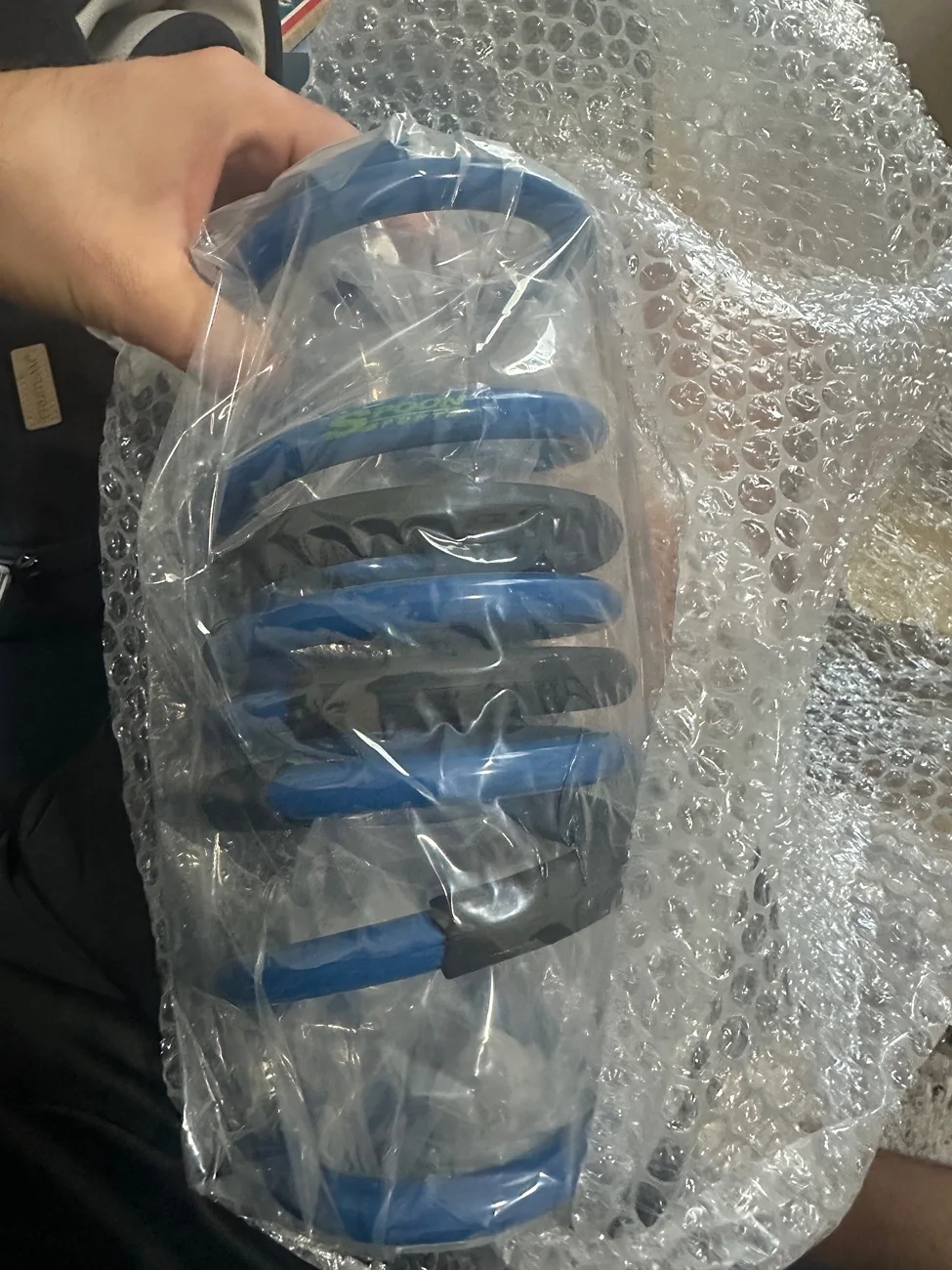
I’ve had Spoons for a couple months now just sitting in the box. But have been thinking about selling for canflex instead.

Acura Integra Spoon Springs for DE5 IMG_0846
 

Victorofhavoc

Senior Member
First Name
Gordan
Joined
Jul 9, 2024
Threads
12
Messages
1,492
Reaction score
1,028
Location
Kansas City
Car(s)
Integra type s
Yes. Unequivocally.

I'll give you a quick TL;DR rundown. I'd suggest pulling up claude or chatgpt to get a detailed breakdown if you're interested.

There's also this amazing video by one of the best in the biz.

https://motoiq.com/watch-lowering-y...center-bump-steer-more-for-ultimate-handling/

The front suspension is McPherson strut, the rear is multi-link. Honda engineered it like this for a reason to allow for the rear to rotate more with most of the weight over the front wheels. However, when you lower the car, the "virtual swing arm" from the suspension design rotates and creates a camber curve. It is shallower by design with a stiff strut in the front than the multiple lateral and trailing links in the rear. This results in gaining more camber in the rear than the front when under load- and this becomes static when lowering the car.

@Victorofhavoc to keep me honest and make sure I captured that correctly.

What happens when you have more camber in the rear than the front in a front-wheel drive platform? UNDERSTEER. Lots of it.

Nearly ruined the car for me until I fixed it.

But we haven't gotten into some of the other things that are affected; watch the motoiq vid for more details.
There is also this article if you want to go super deep... https://nasaspeed.news/tech/suspens...-track-performance-for-strut-suspension-cars/

More camber helps a stock car keep the tire contact flat for sticky rubber. A lowered car will necessitate it because past a certain point the front suspension gains positive camber as it loads. Cutting bump stops (as is common to keep comfort and shock travel) can make this effect worse because the shock can compress further and gain even more positive camber - or you get bump steer from the extra depth.

Other note in the article to going fast is a beefy front bar in a fwd. If you keep the roll down, you keep the positive gain down, but it takes a beeeefy bar to do that. This is where I like the Fl5 ads on track... It keeps the outer shock just a tad stiffer on compression and keeps roll down. Even the stock car at speed has very solid roll characteristics. The Fl5 ads just makes them all faster/snappier.
 

nikw91

Member
First Name
Nik
Joined
Dec 22, 2025
Threads
1
Messages
8
Reaction score
0
Location
South Florida
Car(s)
2025 Honda Civic Type R
There is also this article if you want to go super deep... https://nasaspeed.news/tech/suspens...-track-performance-for-strut-suspension-cars/

More camber helps a stock car keep the tire contact flat for sticky rubber. A lowered car will necessitate it because past a certain point the front suspension gains positive camber as it loads. Cutting bump stops (as is common to keep comfort and shock travel) can make this effect worse because the shock can compress further and gain even more positive camber - or you get bump steer from the extra depth.

Other note in the article to going fast is a beefy front bar in a fwd. If you keep the roll down, you keep the positive gain down, but it takes a beeeefy bar to do that. This is where I like the Fl5 ads on track... It keeps the outer shock just a tad stiffer on compression and keeps roll down. Even the stock car at speed has very solid roll characteristics. The Fl5 ads just makes them all faster/snappier.
So if all of this is true, why does Spoon, Mugen and HKS all lower their track Type R’s?
 

Victorofhavoc

Senior Member
First Name
Gordan
Joined
Jul 9, 2024
Threads
12
Messages
1,492
Reaction score
1,028
Location
Kansas City
Car(s)
Integra type s
So if all of this is true, why does Spoon, Mugen and HKS all lower their track Type R’s?
Better aero effect and less drag? (provided they do roll center adjustment, beefy bar, and appropriate camber).

But more than likely it's for looks and sales.

If you do nothing else than lower a car on springs, you will go slower around a track. In fact, most things most people do to their car will make them slower around a track. For most, performance is not a priority over looks, and that's totally okay.

A performance oriented or track setup is based entirely on the tire you want to run. What the tire wants from spring, shock, alignment, and load is what we must deliver to provide the most optimal use of the tire. This leads to best grip and wear.
 

optronix

Senior Member
Joined
Apr 15, 2023
Threads
27
Messages
1,791
Reaction score
2,561
Location
MD
Car(s)
2024 Integra Type S, 2023 Macan GTS
So if all of this is true, why does Spoon, Mugen and HKS all lower their track Type R’s?
It'd be great if we had access to the full parts list and specs of how these cars are dialed in for competition. But I highly doubt that level of detailed information would be publicly available. The closest we can come to is this:

https://dreamshop.honda.com/s/product/honda-civic-type-r-tcr-race-car/01t6g000005HyfJAAS

There's a PDF brochure at that link that goes into detail into how the cars are equipped, but they don't get into ideal settings. The fact that it's adjustable is the only thing that matters to a competitive race driver/team. All that changes based on tire, track conditions, etc. etc; Gran Turismo type shit.

Suffice to say it's not really recognizable from a car that rolls off the assembly line for customer sale and driven on the road. You don't want it to be.

TL;DR, the cars look better when lowered. You have to build around that if you still want it to perform well on a track, and even more consideration is involved if you want the car to be reasonably tolerable on the road. I'm finding out now that my ideal autocross settings don't really align with my goals for tire longevity if I actually drive the thing as a form of transportation.

Also depending on what tire I'm on, it's not really fun to drive in the rain.
Sponsored


Top