Sponsored


Victorofhavoc

Senior Member
First Name
Gordan
Joined
Jul 9, 2024
Threads
11
Messages
1,332
Reaction score
899
Location
Kansas City
Car(s)
Integra type s
Honestly, I think DSP and deadening would be the biggest contributors. If I was going real cheapo I would do just those two things, with the factory speakers. As you say, EQ (and time delay) can get you a very long way.
I don't even have an amp on my sub. Just the factory lines to some high quality wire I had to finish. I did do fill, deadening the box, covering the box in closed cell, and all of my doors, hatch, rear wells, and under rear seats is 30% strategic deadening with 150-200% 4mm closed cell layers.

Stock exhaust even in sport basically doesn't exist. Borla in comfort can be heard but it sounds "refined and underneath you" since my floor isn't deadened. Tightening all the bolts for the speaker surrounds also made a difference to its rattling. I still get an occasional harmonic buzz, but it's super hard to pinpoint and occurs rarely.
Sponsored
 
OP
OP
ashmostro

ashmostro

Senior Member
Joined
Aug 19, 2025
Threads
19
Messages
477
Reaction score
350
Location
Northern VA
Car(s)
2025 ITS
Yeah I plan to do this too - maybe not as hardcore as you did but who knows!

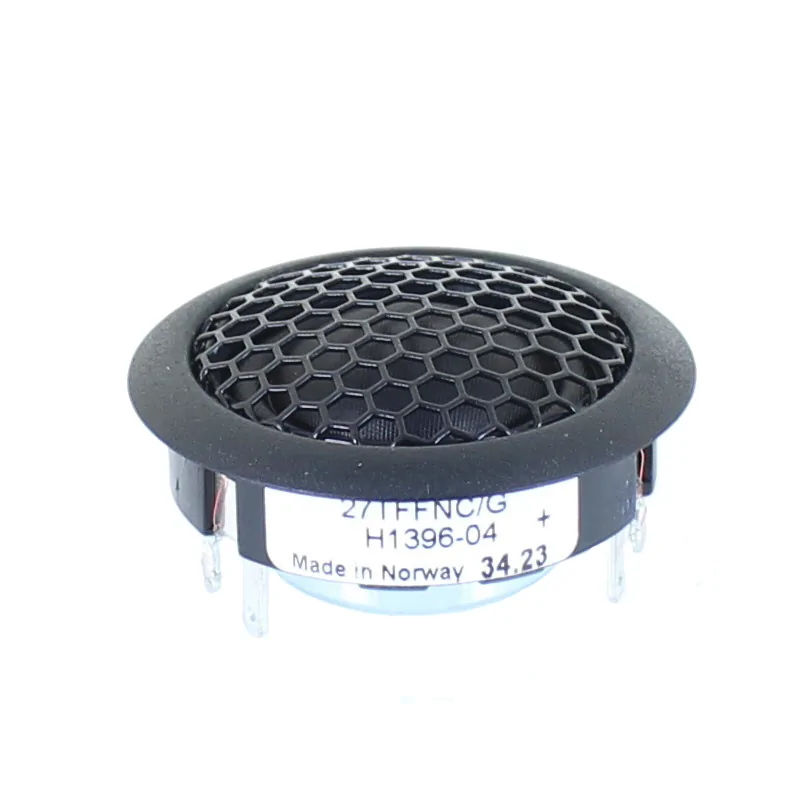
Made yet another strategic change to the plan: upping to 1" tweeter from 3/4" so I can push the crossover frequency down below the midrange beam point (will go with 2.5kHz), which will massively aid in image stability. I'll lose some top end (>13kHz) image stability for the same beaming reason, but our ears are WAY more sensitive at 2-4kHz than >10kHz. Good tradeoff.

Will go with the venerable Seas Prestige, and will use a pod for it instead of the stock inside the A pillar location.

https://www.seas.no/index.php?optio...cg&catid=45:seas-prestige-tweeters&Itemid=462

Acura Integra Sound system build progress thread (warning: will be slooooow) 1766469155606-g5
 
Last edited:
OP
OP
ashmostro

ashmostro

Senior Member
Joined
Aug 19, 2025
Threads
19
Messages
477
Reaction score
350
Location
Northern VA
Car(s)
2025 ITS
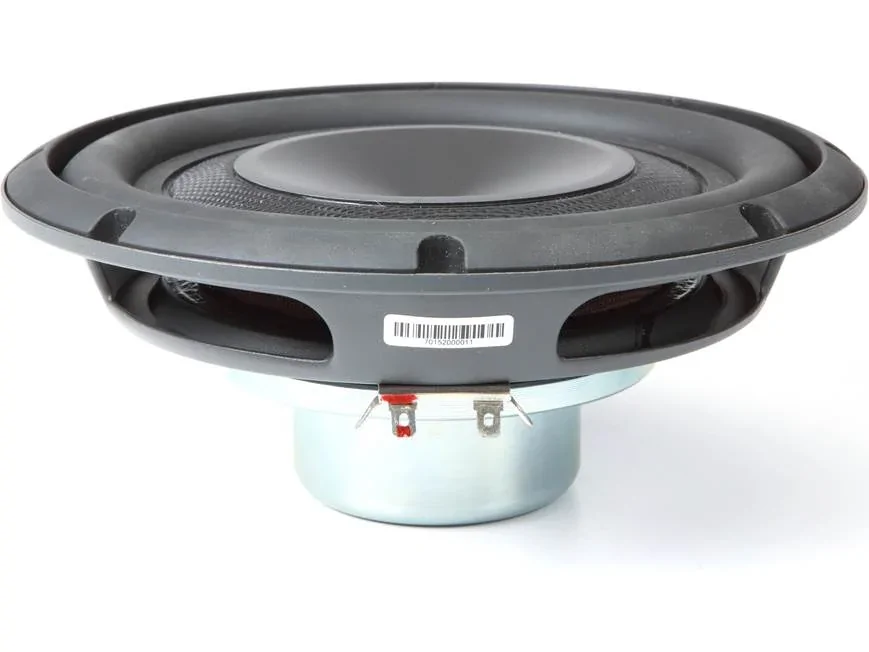
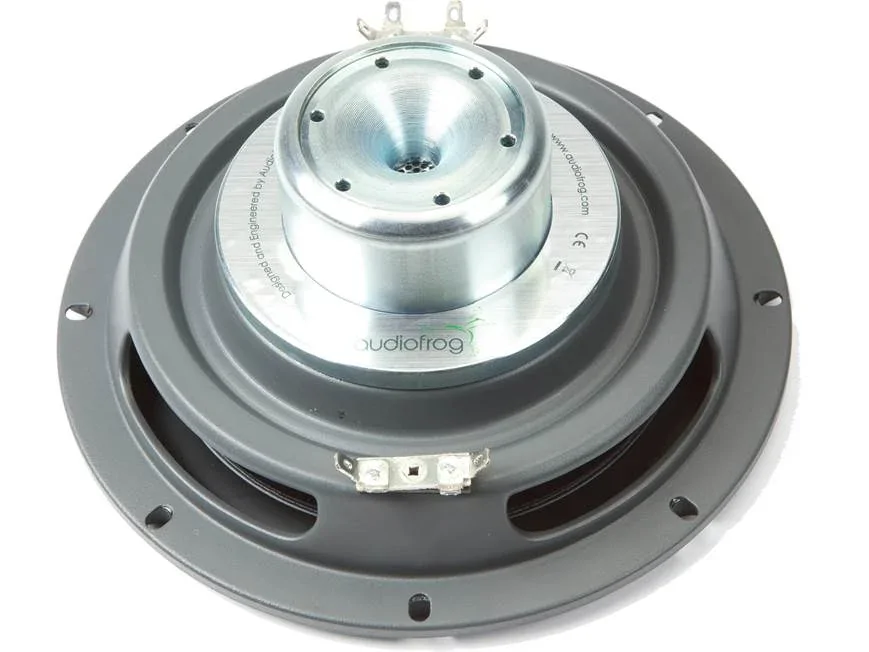
I think I found a subwoofer (Audiofrog GS8ND2) that will work even better than the Rockford in our little factory enclosure, and likely won't hit the grille. The mounting depth is only 3.125" and the basket diameter is smaller than the Rockford, so it may not require the same trimming (or at least a simple trim ring to adapt the mounting holes). Xmax is higher (10mm vs 8.3mm) and the efficiency is much much higher (91dB vs 82dB). This would make it a much better sub choice for those who are using the factory amplification too.

Acura Integra Sound system build progress thread (warning: will be slooooow) 1766939280817-lx

Acura Integra Sound system build progress thread (warning: will be slooooow) 1766939295921-5s
 
OP
OP
ashmostro

ashmostro

Senior Member
Joined
Aug 19, 2025
Threads
19
Messages
477
Reaction score
350
Location
Northern VA
Car(s)
2025 ITS
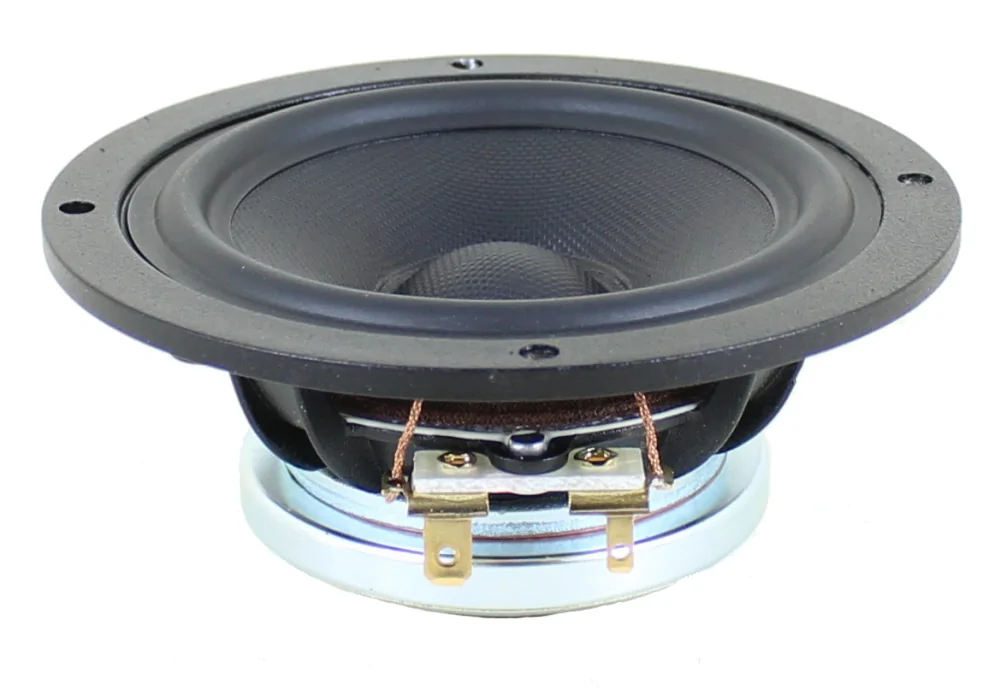
Changing strategies on the mids - going with true midrange and a larger 4" diameter in order to better match the midbass to midrange integration. Beaming is simply not an issue given the low crossover capability of the Seas tweeter, so it makes sense to do this for many reasons. And it makes sense to move away from a wideband as I just don't need one, and widebands introduce compromises in the frequency and impedance response of the midrange band.

Going with Scan Speak 10F/4424G, still in pods

Acura Integra Sound system build progress thread (warning: will be slooooow) 1766940793027-qc
 
Last edited:

Dvs1270

Member
First Name
Jeffery
Joined
Sep 23, 2025
Threads
3
Messages
29
Reaction score
37
Location
Midland, Ga
Car(s)
2025 Integra Type 2, 2025 BMW X30 X-drive
Following, but I finally added a sub, lci2, & amp today. I used the left rear door for a signal. That allowed me to leave the anc connected. After tuning the settings, I turned the music off in order to hear the hum of the car....... go figure. I was able to recapture the full range of my 10 in sub. The oem is still connected, but it will get pulled completely at some point.
 

Sponsored

OP
OP
ashmostro

ashmostro

Senior Member
Joined
Aug 19, 2025
Threads
19
Messages
477
Reaction score
350
Location
Northern VA
Car(s)
2025 ITS
Following, but I finally added a sub, lci2, & amp today. I used the left rear door for a signal. That allowed me to leave the anc connected. After tuning the settings, I turned the music off in order to hear the hum of the car....... go figure. I was able to recapture the full range of my 10 in sub. The oem is still connected, but it will get pulled completely at some point.
I hadn't considered that the ANC only feeds through the subwoofer but that does make perfect sense since road noise is mostly bass. That explains why the ANC microphone is on the headliner above the rear seats!

Good job on your setup! Have you thought about adding in the right door signal as well so you can sum stereo bass signals? They do exist on recordings, so it could be worth doing.
 

Victorofhavoc

Senior Member
First Name
Gordan
Joined
Jul 9, 2024
Threads
11
Messages
1,332
Reaction score
899
Location
Kansas City
Car(s)
Integra type s
I think I found a subwoofer (Audiofrog GS8ND2) that will work even better than the Rockford in our little factory enclosure, and likely won't hit the grille. The mounting depth is only 3.125" and the basket diameter is smaller than the Rockford, so it may not require the same trimming (or at least a simple trim ring to adapt the mounting holes). Xmax is higher (10mm vs 8.3mm) and the efficiency is much much higher (91dB vs 82dB). This would make it a much better sub choice for those who are using the factory amplification too.

1766939280817-lx.webp

1766939295921-5s.webp
The audiofrog is good. It's minimum wattage is much higher than the Rockford so it's ceiling will be higher but low volumes and low range might suffer a bit on a stock amp, despite the much higher sensitivity. Since you're going with an aftermarket amp you should be good, but the desire to just throw something in is what drove me personally to the Rockford. That and for car systems with noisy interiors I like the way Rockford subs "punch". The audiofrog would be my choice if I insulated every bit of the car, including the roof and floor (which I might eventually get to... we'll see).

I'm curious if the audiofrog will fit for you with the stock enclosure. The trimming for the Rockford was really miniscule and I just did it with tin snips.

For all the various mixed choices in speakers are you at all worried about variance in imaging or tonality? Or are you trying to correct all of that with the eq/amp?
 
OP
OP
ashmostro

ashmostro

Senior Member
Joined
Aug 19, 2025
Threads
19
Messages
477
Reaction score
350
Location
Northern VA
Car(s)
2025 ITS
heard on the simplicity of the RF sub - it just works. That said, why do you say the AF would suffer at low volume despite the higher sensitivity? I'm not following.

I'm not worried much about voicing for a few reasons: the midrange and tweeters are both of similar materials. All three are very low distortion drivers and all three are operating primarily outside of their system resonant frequency (again, this matters primarily for the midrange and tweeter). They are all similar sensitivity with more Xmax than they need for the listening levels I will achieve, so none will go into non-linear response before the others do.

Voicing is really all of these factors rolled into one, and yes, plus EQ. But to your point, EQ isn't able to fix fundamentally different sounding speakers in the time domain, which is where all of the above comes into play, and was taken into account. That's why I kept changing my driver choice - the deeper I dug, the more nuanced issues I found in the combinations. This combo should sound amazing - I wish I could build it tomorrow!

Oh, you asked about imaging too. This is all about xover point selection, driver location, and aim. All speakers except the tweeters will not beam at all in the bands I have selected. E.G. the midbass begins to beam around 1.6 kHz but my lowpass is 350Hz. The midrange starts to beam at 4kHz but my lowpass is 2.5khz. The sub is obviously non directional. As for the tweeter, it begins to beam around 13khz but that can be mitigated by aiming them at the center of the front seating positions. And then to top it off, every speaker will be time delayed independently. One detail that matters with the tweeter and midrange are the half-wavelength distance which varies by xover point - at 2-2.5kHz it's about 3 inches. If I can keep the center of the mid and tweet close to this distance they will act as a point source, which tightens imaging massively. I'll try to get them as close as possible to this metric.
 
Last edited:

Victorofhavoc

Senior Member
First Name
Gordan
Joined
Jul 9, 2024
Threads
11
Messages
1,332
Reaction score
899
Location
Kansas City
Car(s)
Integra type s
heard on the simplicity of the RF sub - it just works. That said, why do you say the AF would suffer at low volume despite the higher sensitivity? I'm not following.

I'm not worried much about voicing for a few reasons: the midrange and tweeters are both of similar materials. All three are very low distortion drivers and all three are operating primarily outside of their system resonant frequency (again, this matters primarily for the midrange and tweeter). They are all similar sensitivity with more Xmax than they need for the listening levels I will achieve, so none will go into non-linear response before the others do.

Voicing is really all of these factors rolled into one, and yes, plus EQ. But to your point, EQ isn't able to fix fundamentally different sounding speakers in the time domain, which is where all of the above comes into play, and was taken into account. That's why I kept changing my driver choice - the deeper I dug, the more nuanced issues I found in the combinations. This combo should sound amazing - I wish I could build it tomorrow!

Oh, you asked about imaging too. This is all about xover point selection, driver location, and aim. All speakers except the tweeters will not beam at all in the bands I have selected. E.G. the midbass begins to beam around 1.6 kHz but my lowpass is 350Hz. The midrange starts to beam at 4kHz but my lowpass is 2.5khz. The sub is obviously non directional. As for the tweeter, it begins to beam around 13khz but that can be mitigated by aiming them at the center of the front seating positions. And then to top it off, every speaker will be time delayed independently. One detail that matters with the tweeter and midrange are the half-wavelength distance which varies by xover point - at 2-2.5kHz it's about 3 inches. If I can keep the center of the mid and tweet close to this distance they will act as a point source, which tightens imaging massively. I'll try to get them as close as possible to this metric.
The af has a lower range of 250w vs the 150w of the Rockford I believe. The Rockford can comfortably go down to 50w in those low to mid sub ranges where the AF will have a bit of trouble (in theory). This is assuming stock amp, which is not exactly your plan/case. Sensitivity helps for sure but even 9db (which is a ton) won't help if you're not pushing the wattage to make the minimum movements, especially in the lower ranges.

By imaging i mean specifically how some speakers are more directional and form different tones depending on their angle and drive. True tonality is the other thought... For example, I had a klipsch reference center channel and reference premier bookshelvers. Left to right they sounded completely different, and even a ton of time spent on eq, crossover, and drive tuning did not totally resolve it. I stepped up to a ref premier 504C II and suddenly tone was balanced and everything was smooth. In my past car audio setups I've spent a lot of time trying to balance tone and how the drivers present the sound. It has not always worked out well, especially if mixing driver brands.

I'm just picky though. I spent years playing musical instruments in classical and jazz, so I've just become ocd about the smallest of differences. This is most often a "me problem" and what most people find to sound great I find problems to nitpick over... Drives my wife mad 😂. She's still fuming over the grand I spent on adding in atmos for that <1% of time they see 🙃🤣
 
OP
OP
ashmostro

ashmostro

Senior Member
Joined
Aug 19, 2025
Threads
19
Messages
477
Reaction score
350
Location
Northern VA
Car(s)
2025 ITS
The af has a lower range of 250w vs the 150w of the Rockford I believe. The Rockford can comfortably go down to 50w in those low to mid sub ranges where the AF will have a bit of trouble (in theory). This is assuming stock amp, which is not exactly your plan/case. Sensitivity helps for sure but even 9db (which is a ton) won't help if you're not pushing the wattage to make the minimum movements, especially in the lower ranges.
I respectfully disagree with this reasoning. In fact I categorize it as a myth I wish would go away.

RMS power handling is purely a thermal specification. There's only so much heat a voice coil can transfer out of itself on a constant basis (that's the RMS spec). It can take shorter bursts and then liberate the heat in subsequent cycles so long as the bursts are not recurring in short periods of time (that's the peak spec).

It absolutely has nothing to do with "minimum power to move the cone"... That simply doesn't exist. Sensitivity dictates how much sound you get from the same power input, period. So the more sensitive Audiofrog will do better than the Rockford with stock power regardless of their power handling specs.

Now, there are other factors that will affect the quality of the sound (the Thiele-Small parameters) but the sensitivity informs the overall volume.
 
Last edited:

Sponsored

OP
OP
ashmostro

ashmostro

Senior Member
Joined
Aug 19, 2025
Threads
19
Messages
477
Reaction score
350
Location
Northern VA
Car(s)
2025 ITS
By imaging i mean specifically how some speakers are more directional and form different tones depending on their angle and drive. True tonality is the other thought... For example, I had a klipsch reference center channel and reference premier bookshelvers. Left to right they sounded completely different, and even a ton of time spent on eq, crossover, and drive tuning did not totally resolve it. I stepped up to a ref premier 504C II and suddenly tone was balanced and everything was smooth. In my past car audio setups I've spent a lot of time trying to balance tone and how the drivers present the sound. It has not always worked out well, especially if mixing driver brands.
Directionality is dictated 90% by piston diameter. You can tweak around the edges via tools like phase plugs or ring radiation, so you do need to consider that as well (which I have, by choosing all circumferentially- driven diaphragms with no phase plugs or center constraints ie ring radiation).

So once you've selected your driver sizes, if you then choose crossover points that occur materially below their respective beaming frequencies, you won't have the effect of the sound quality changing as you move your head. You will break time delay and intensity alignments but not the frequency response.
 
Last edited:
OP
OP
ashmostro

ashmostro

Senior Member
Joined
Aug 19, 2025
Threads
19
Messages
477
Reaction score
350
Location
Northern VA
Car(s)
2025 ITS
Btw the reason
The af has a lower range of 250w vs the 150w of the Rockford I believe. The Rockford can comfortably go down to 50w in those low to mid sub ranges where the AF will have a bit of trouble (in theory). This is assuming stock amp, which is not exactly your plan/case. Sensitivity helps for sure but even 9db (which is a ton) won't help if you're not pushing the wattage to make the minimum movements, especially in the lower ranges.
Wait, I think I may have figured out where your understanding could be flawed. The metric "W" is not a frequency metric, it's a power metric as in watts.

If you want to understand how low a speaker can go, you want to look at its fs, or resonant frequency. More easily, most spec sheets actually just tell you what the useable frequency response is (although not all manufacturers are consistent with how this is measured so that's why fs can be more useful as it can't lie).

Did I correctly capture your understanding in my first paragraph?
 
Last edited:

Victorofhavoc

Senior Member
First Name
Gordan
Joined
Jul 9, 2024
Threads
11
Messages
1,332
Reaction score
899
Location
Kansas City
Car(s)
Integra type s
Btw the reason

Wait, I think I may have figured out where your understanding could be flawed. The metric "W" is not a frequency metric, it's a power metric as in watts.

If you want to understand how low a speaker can go, you want to look at its fs, or resonant frequency. More easily, most spec sheets actually just tell you what the useable frequency response is (although not all manufacturers are consistent with how this is measured so that's why fs can be useful as it can't lie).

Did I correctly capture your understanding in my first paragraph?
I think you're overthinking it. Speakers work with magnets and the point of the power delivered to the speaker is to drive the coiled wired to create a current and produce a magnetic field to work with and against the rest of the magnets in the driver. The larger the coil and heavier the magnets the more power it will take to move. There is always some waste with power delivery (often as heat).

Yes w stands for wattage. The rms is supposed to be an ideal where that speaker works efficiently at high volumes but you can always drive up and down as much as you want. There is definitely a lower range of power where a driver just won't move. As an extreme example, take a 24" woofer and compare it to a 1/2" tweeter... It doesn't matter how efficient the woofer is, it won't move when you give it half a watt, but the tweeter will. Again it doesn't matter to you if you're replacing the amp, but it may matter to others. I'm not talking about the speaker's lower effective range. That's something else entirely and a lot more nuanced once you go below 35hz.

It's correct for higher frequencies the shape of the cone and speaker, size, and it's direction have to do with how the tone and image is delivered to your ears, but also not what I'm talking about. You can have two speakers that are identical in every way except for coil wind tightness and size. With the same resistance one will consume (waste) more power at the lower wattage range. Timing will be the same, roughly, and imaging could be very similar if placed the same, but one would still sound more "full" when each is driven by say 5 watts. The one with fewer coils would sound better initially but as volume and power delivery goes up it would start to "thin".

In a car you're super limited by direction and the idea Is that all passengers should be able to hear the music somewhat equally. To that end you're fighting the distance, shape, and density of all the materials around you in the car and the manufacturer's audio experts (the good ones at least) spend a long time calibrating the speaker layout and shape/size specifically for each car. For example, the center channel in most cars is tuned to be reflective while the doors are not. The reflection changes the tone and can invert the phase. The lower door drivers fight over your feet and get deadened by the center tunnel. If you have a very similar driver in both areas, they will sound fairly different (at least if you have the patience and ocd to focus on the differences). "studio quality" sound is typically more around deadening, positioning, and balancing than it is about driver quality or response. The worst position to be in is a specific note that plays slightly differently between the two but forms a harmonic. I like screwing with people when I'm a passenger in their car sometimes and whistling a c sharp when their speakers play a c flat. It echoes as the waves build and is hilarious to watch people wonder what's going on. I'd hate for that to happen on its own, though.

Sounds like you have more technical knowledge with speakers than me. I've been very hands on, and again a history with playing is what has made me ocd over sound. Sorry if I'm not describing it in the best technical terms. Truth is, the reproduction of sound in the its is pretty good!.. When you're parked and the car isn't running. I suspect that's how they tuned it, and that appears to be how savagegeese measured it. Driving around it just doesn't have the "power" to push over the road roar, especially the lows. The anc does not help here. The tweeters and drivers are really bright though. That's not necessarily bad. It's the same thing people complain about klipsch horns over, but you just tune for it. I believe with some tuning in (which you could do with an amp and better eq), you'd be in a much happier place. Better drivers are always better, as long as everything else aligns.

Hope it all works out for you! Is love to hear it when you're done 😊
 
OP
OP
ashmostro

ashmostro

Senior Member
Joined
Aug 19, 2025
Threads
19
Messages
477
Reaction score
350
Location
Northern VA
Car(s)
2025 ITS
Again, respectfully, I disagree with the thinking above. It's objectively incorrect (again, respectfully).

I'm glad you detected that I know a good deal about audio engineering (I do) and hope that you can factor that in when hearing me out!

Heard on you understanding the 'W' spec is wattage. We agree on that. We don't agree on what it means for a speaker, though.

The power spec on a speaker is simply how much power it can handle. It's not a lower limit on movement at all. In your example where a subwoofer and a tweeter both get 5 watts, you are right that the sub will move a miniscule amount. But the movement alone is not the only variable that determines the sound output. It's the movement multiplied by the area (and frequency), to get volume displaced per unit time. A large speaker doesn't *need* to move much to make a lot of sound. That's why larger subwoofers have higher SPL potential than smaller ones. It's just swept area.

Speakers are remarkably low-friction. There is no "activation energy" required to get a speaker moving. If there was, it would be a terribly nonlinear sound producing device. As I stated before, if every Thiele-Small parameter of two speakers are identical other than sensitivity (technically this isn't possible mathematically but humor me for this point please), then the more sensitive speaker will ALWAYS produce more output than the less sensitive one, no matter what the power input level is.

To your reasonable comment that some power is always wasted as heat, you are absolutely correct. But keep in mind the sensitivity spec is a measured specification, not a calculated one. It's the output of the speaker after all the used and wasted energy has been converted already. It's a real-world number that cannot lie. And keep in mind, it's typically measured at 1 watt, so by definition it's measuring the output of the speaker at a "low level" already... and far, far away from its RMS power handling spec (which is also an empirical measurement).

I hope to continue this discussion!
 
Last edited:

Victorofhavoc

Senior Member
First Name
Gordan
Joined
Jul 9, 2024
Threads
11
Messages
1,332
Reaction score
899
Location
Kansas City
Car(s)
Integra type s
Again, respectfully, I disagree with the thinking above. It's objectively incorrect (again, respectfully).

I'm glad you detected that I know a good deal about audio engineering (I do) and hope that you can factor that in when hearing me out!

Heard on you understanding the 'W' spec is wattage. We agree on that. We don't agree on what it means for a speaker, though.

The power spec on a speaker is simply how much power it can handle. It's not a lower limit on movement at all. In your example where a subwoofer and a tweeter both get 5 watts, you are right that the sub will move a miniscule amount. But the movement alone is not the only variable that determines the sound output. It's the movement multiplied by the area (and frequency), to get volume displaced per unit time. A large speaker doesn't *need* to move much to make a lot of sound. That's why larger subwoofers have higher SPL potential than smaller ones. It's just swept area.

Speakers are remarkably low-friction. There is no "activation energy" required to get a speaker moving. If there was, it would be a terribly nonlinear sound producing device. As I stated before, if every Thiele-Small parameter of two speakers are identical other than sensitivity (technically this isn't possible mathematically but humor me for this point please), then the more sensitive speaker will ALWAYS produce more output than the less sensitive one, no matter what the power input level is.

To your reasonable comment that some power is always wasted as heat, you are absolutely correct. But keep in mind the sensitivity spec is a measured specification, not a calculated one. It's the output of the speaker after all the used and wasted energy has been converted already. It's a real-world number that cannot lie. And keep in mind, it's typically measured at 1 watt, so by definition it's measuring the output of the speaker at a "low level" already... and far, far away from its RMS power handling spec (which is also an empirical measurement).

I hope to continue this discussion!
I believe I'm still not being clear or there's some misunderstanding...

I'm not saying there's a minimum power based on what "wattage" a speaker is intended for, just that the driver is designed for a particular range. This circles around to Newton and lorentz law as well as the fs you already referenced. There's also moving mass to account for in high Excursion drivers which is typically the preference for vehicle subs. Yes, higher sensitivity can overcome some of this, but it all plays together.

While movement in a driver doesn't have much friction, it still has suspension to fight through. Bigger woofer, more weight, more coils all need more suspension which means more resistance and ultimately more power to drive. Look up the part 1 and part 2 research papers titled "Loudspeakers in Vented Boxes" and they go over exactly this.
Sponsored


Top