slowcountry
Senior Member
- Thread starter
- #1
Nerding out on CVT fluid over here... Was talking to AI about whether to stick with the Honda/Idemitsu HCF-2 CVT Transmission Fluid, or going to something like Ravenol or AMSOIL. Gemini thinks that using anything other than the Honda HCF-2 voids the transmission warranty, but we're already tuned and bolted on so I'm not too worried there.
Here's some data on the different fluids available:
Based on the data, here is the breakdown.
1. Idemitsu HCF-2 (The OEM Baseline)
This is the benchmark. It's a high-quality (likely Group III synthetic blend) fluid engineered to do its job perfectly well for the 60,000-mile life of the fluid in a stock car. Its specs are balanced and meet the HCF-2 requirement.
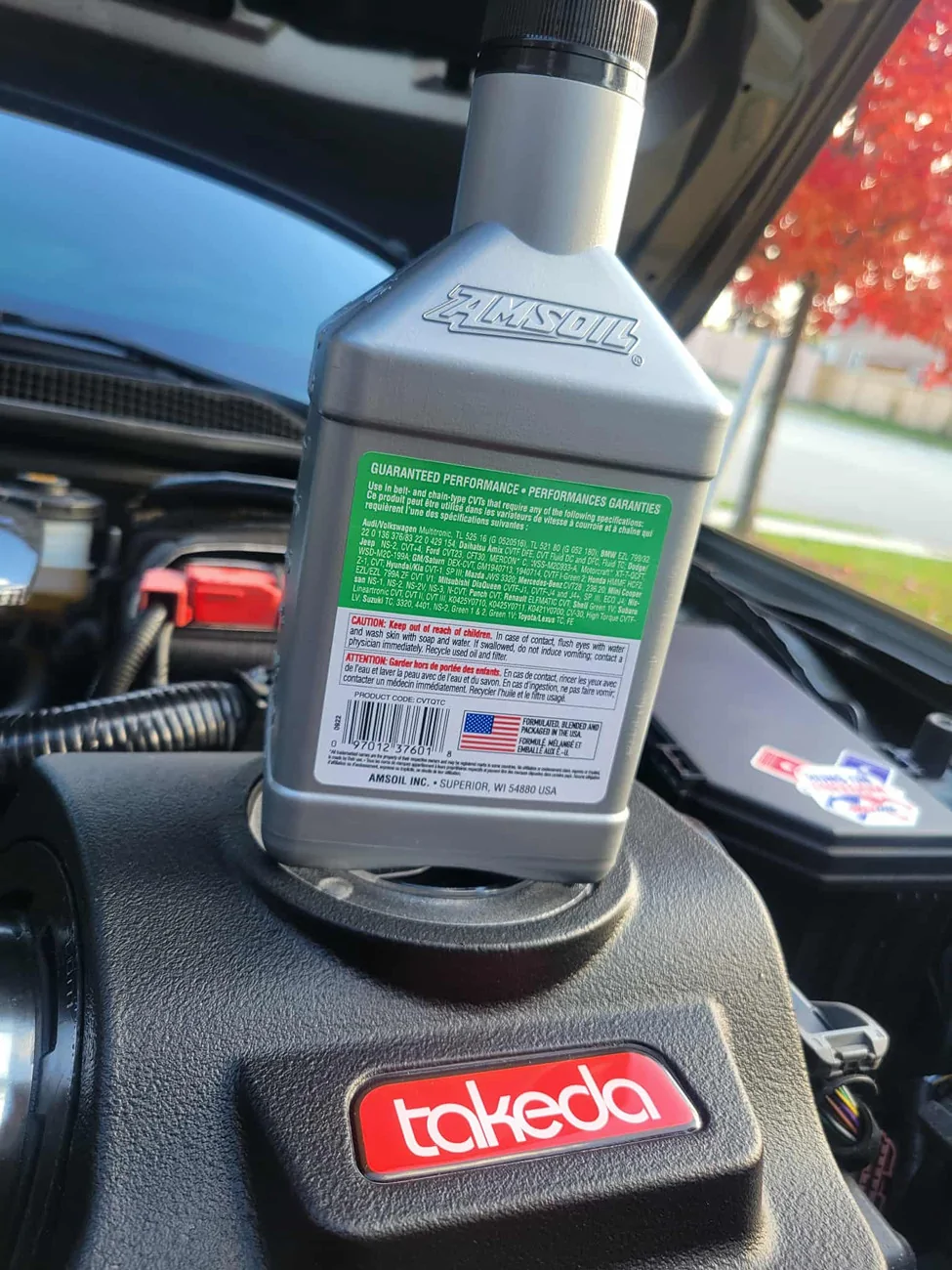
2. AMSOIL Synthetic CVT
AMSOIL's philosophy is Heat & Durability.
3. Ravenol HCF-2 Fluid
Ravenol's philosophy is Stability & Efficiency.
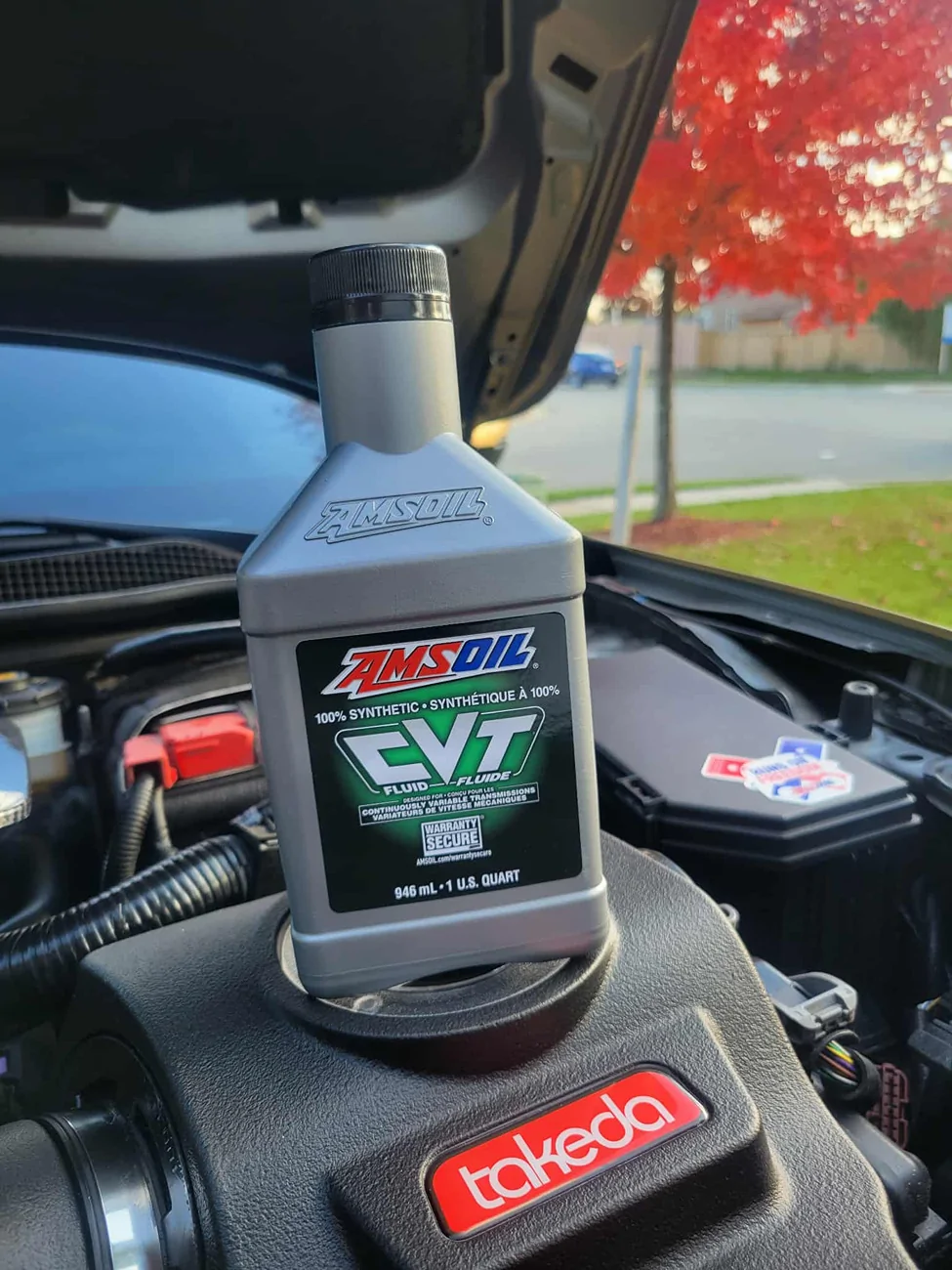
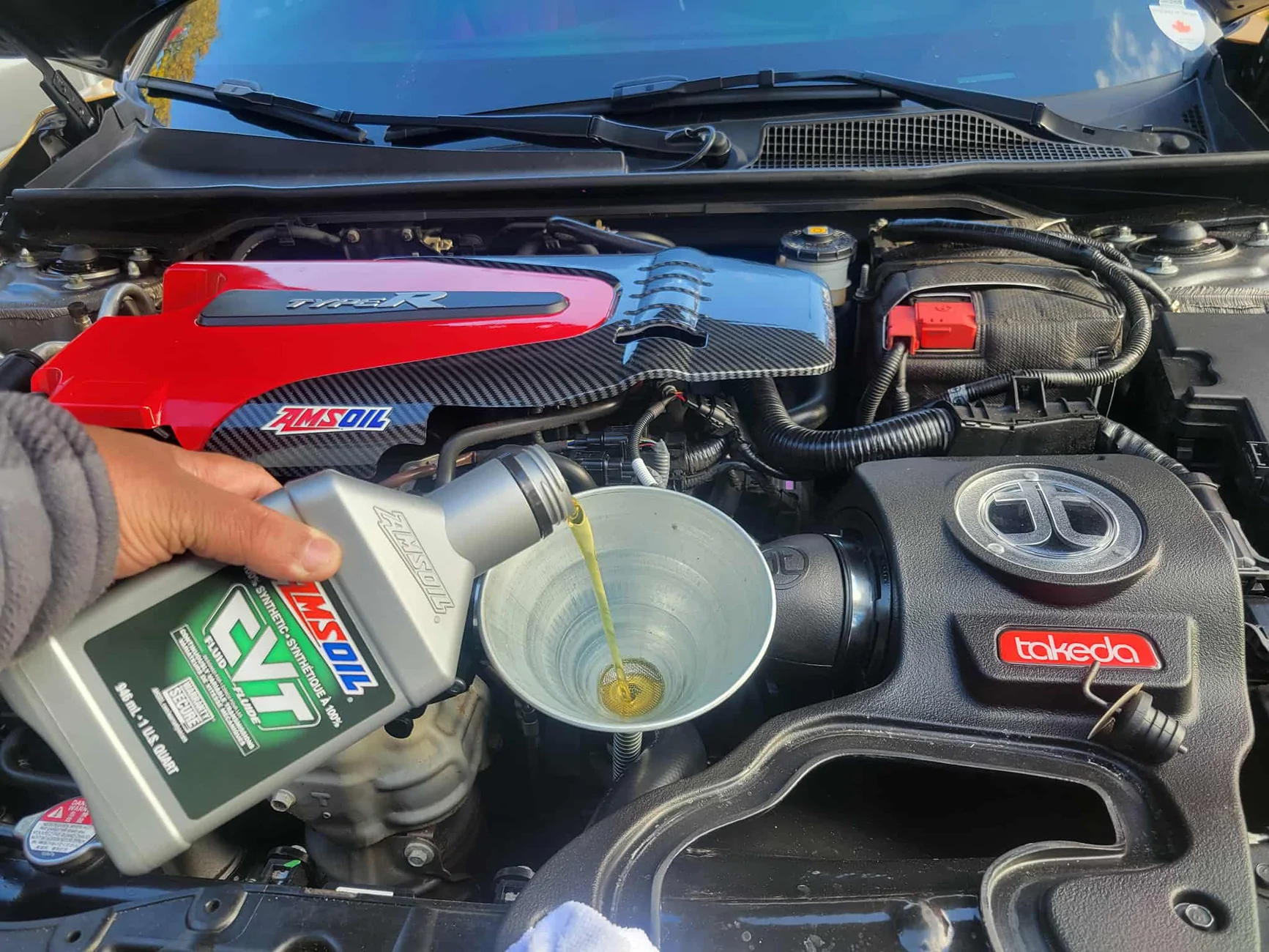
Leaning towards Ravenol... Any opinions? Mostly curious if anyone has actually used the Ravenol or Amsoil fluids in place of the OEM. Or, is the consensus to stick with the OEM HCF-2?
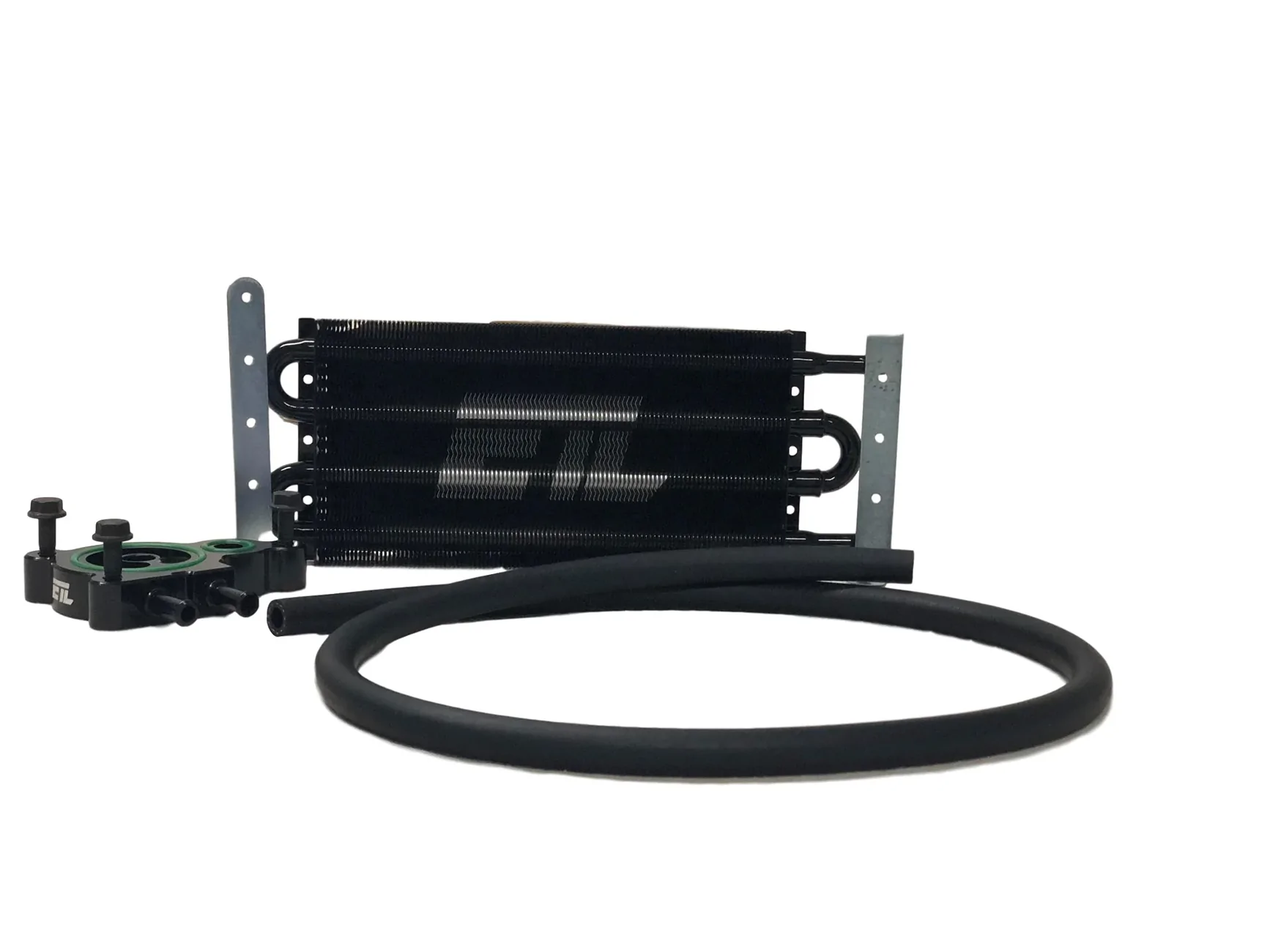
I have a transmission fluid cooler to install, so planning to get some on hand here. Figured I'd flush the system while I'm at it.
Here's some data on the different fluids available:
| Metric | Idemitsu H2 (OEM Baseline) | AMSOIL Synthetic CVT | Ravenol HCF-2 | What This Metric Means |
| Base Oil Type | Synthetic Blend / Group III | 100% Synthetic | 100% Synthetic (PAO-based) | PAO (Group IV) is the most stable synthetic base, superior to Group III. |
| Viscosity @ 100°C | 7.07 cSt | 7.3 cSt | 6.95 cSt | How thick the fluid is at operating temp (100°C = 212°F). All are very close, as required by the HCF-2 spec. |
| Viscosity @ 40°C | 29.20 cSt | 34.9 cSt | 24.95 cSt | How thick the fluid is during a "cold" start. A lower number means less drag and smoother operation when cold. |
| Viscosity Index (VI) | Not Published | 183 | 265 | The single most important metric here. A higher VI means the fluid's viscosity changes less as it heats up. A VI of 265 is exceptionally high and indicates extreme stability. |
| Pour Point | Not Published | -46°C / -51°F | -54°C / -65°F | The lowest temperature at which the fluid will still pour. Ravenol has a significant advantage in extreme cold. |
| Flash Point | Not Published | 218°C / 424°F | 180°C / 356°F | The temperature at which the fluid's vapors can ignite. A higher number is better, indicating superior thermal stability and resistance to "boiling off" or breaking down under extreme heat. |
| Brookfield Viscosity @ -40°C | 8,800 mPa·s | 9,051 mPa·s | 2,520 mPa·s | This is the actual measure of cold-start performance. The fluid must be pumped by the transmission, and Ravenol's number is drastically lower (better). It will flow and protect components far more easily in deep cold than any of the others. |
Based on the data, here is the breakdown.
1. Idemitsu HCF-2 (The OEM Baseline)
This is the benchmark. It's a high-quality (likely Group III synthetic blend) fluid engineered to do its job perfectly well for the 60,000-mile life of the fluid in a stock car. Its specs are balanced and meet the HCF-2 requirement.
2. AMSOIL Synthetic CVT
AMSOIL's philosophy is Heat & Durability.
- Its biggest strength is the Flash Point. At 218°C, it is significantly more resistant to thermal breakdown than the Ravenol. This is a major consideration for a tuned, bolt-on car that is being driven hard, as you'll be generating far more heat in the CVT than a stock car.
- Its viscosity (VI of 183) is very stable, and its 40°C/100°C numbers are slightly thicker than the others, which can provide a thicker-feeling "cushion" of protection on the belt and pulleys at high temps.
- Its cold-start performance is effectively the same as the OEM fluid.
3. Ravenol HCF-2 Fluid
Ravenol's philosophy is Stability & Efficiency.
- Its base oil is superior. It's the only one that explicitly states it uses PAO (Group IV) base stocks. This is the foundation for all its other wins.
- Its Viscosity Index (265) is phenomenal. This is in a different league. It means the fluid's performance will be incredibly consistent, whether the transmission is at -20°F or 200°F. This consistency is ideal for a high-performance application where you want predictable behavior.
- Its cold-start performance is unmatched. The Brookfield Viscosity is ~70% lower (better) than its competitors. This means on a cold start, the fluid provides immediate lubrication, reducing wear and drag.
- Choose AMSOIL if... Your primary concern is heat. If you plan on tracking the car, driving it extremely hard in hot Arkansas summers, or are just most worried about cooking the fluid, AMSOIL's high flash point provides the best protection against thermal breakdown.
- Choose Ravenol if... Your primary concern is ultimate stability and consistency. The PAO base and sky-high Viscosity Index mean this fluid will be the most "stable" and "like new" across the widest possible range of temperatures. It's an engineer's choice, focusing on the absolute best base-stock and viscosity performance.
Leaning towards Ravenol... Any opinions? Mostly curious if anyone has actually used the Ravenol or Amsoil fluids in place of the OEM. Or, is the consensus to stick with the OEM HCF-2?
I have a transmission fluid cooler to install, so planning to get some on hand here. Figured I'd flush the system while I'm at it.
Sponsored
Last edited: